
We were enjoying a long siesta at the end of our hike. Here, we were mesmerised by the landscape. It seemed we had entered a realm of the enchantment of senses, where we could check in any time we wanted but could never leave.
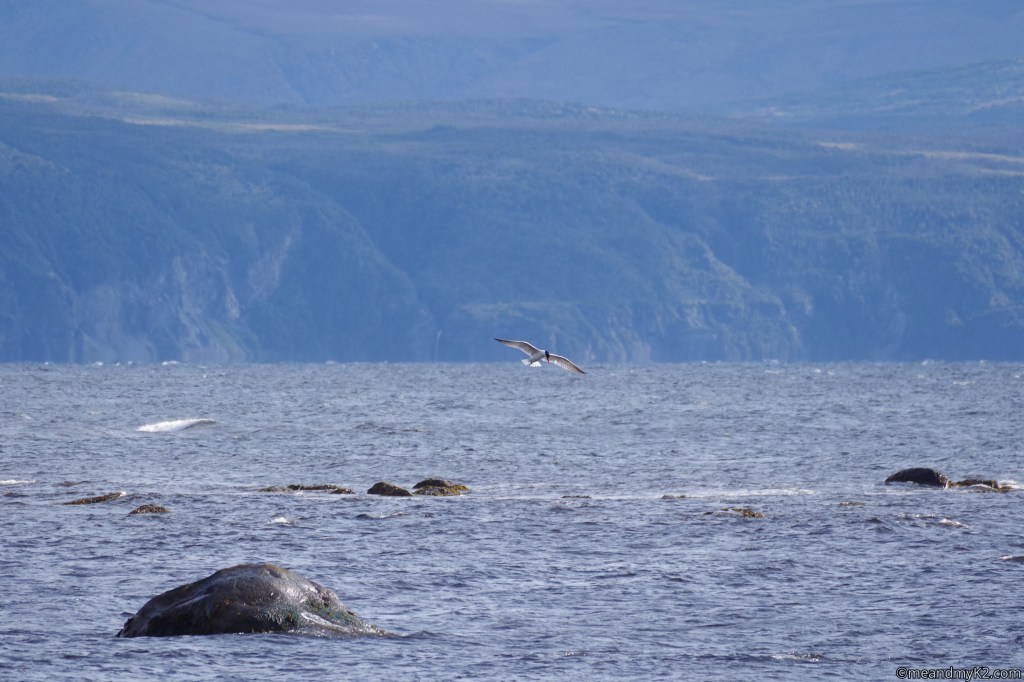
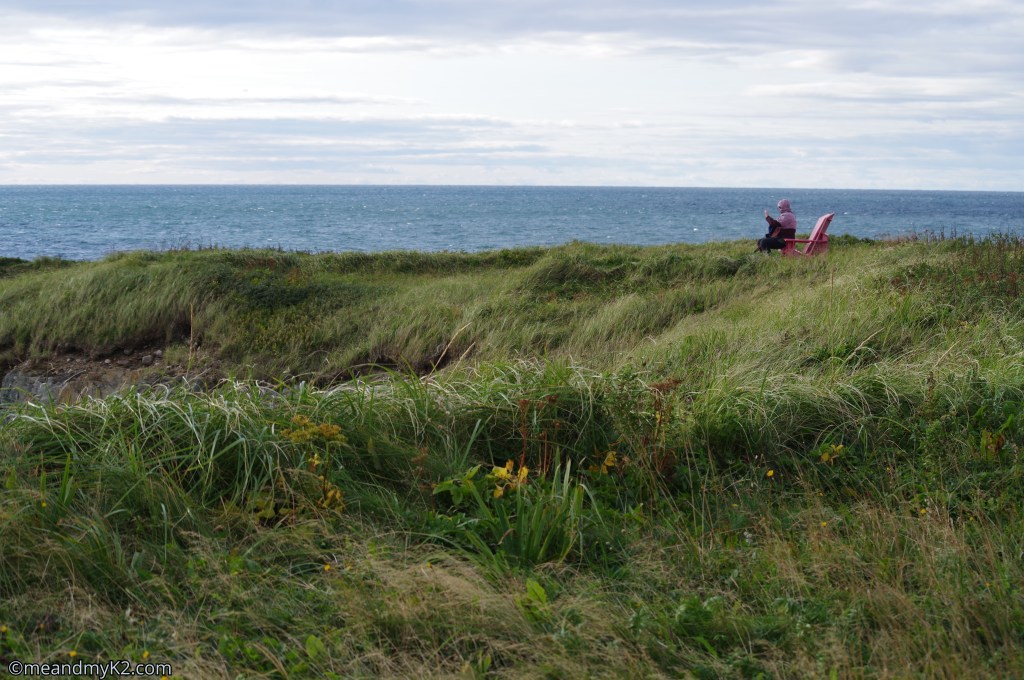
An arctic tern was flying in the distance, continually hovering over the waters of the Gulf of St. Lawrence and diving for a fish with gorgeous mountains in the background and beautiful rocks in the water in the foreground.
We had just finished our hike on the Coastal Trail at Gros Morne National Park, the second largest national park of eastern Canada.
Gros Morne National Park, located on the west coast of Newfoundland, is host to a myriad of natural wonders: Newfoundland’s second highest peak at 806 meters (2,622 feet) with its arctic ecosystem, a freshwater fjord sheltered by towering cliffs, the highest waterfall in eastern North America, sandy beaches, and most important of them all, the Tablelands, the rocky landscape that looks more like something you’d find on Mars than on Earth, with its barren reddish-brown terrain and jagged peaks.
The park has several trails in the north, central and south sections. We were able to only cover 25% of them, including the toughest Gros Morne Mountain trail.
1. The discovery centre
Our exploration of this national park should have started with a visit to the Discovery Centre, located in the southwest peninsular corner of the park. However, because of the rain in the forecast on the second day, we scheduled a climb to the Gros Morne Mountain on the very first day.

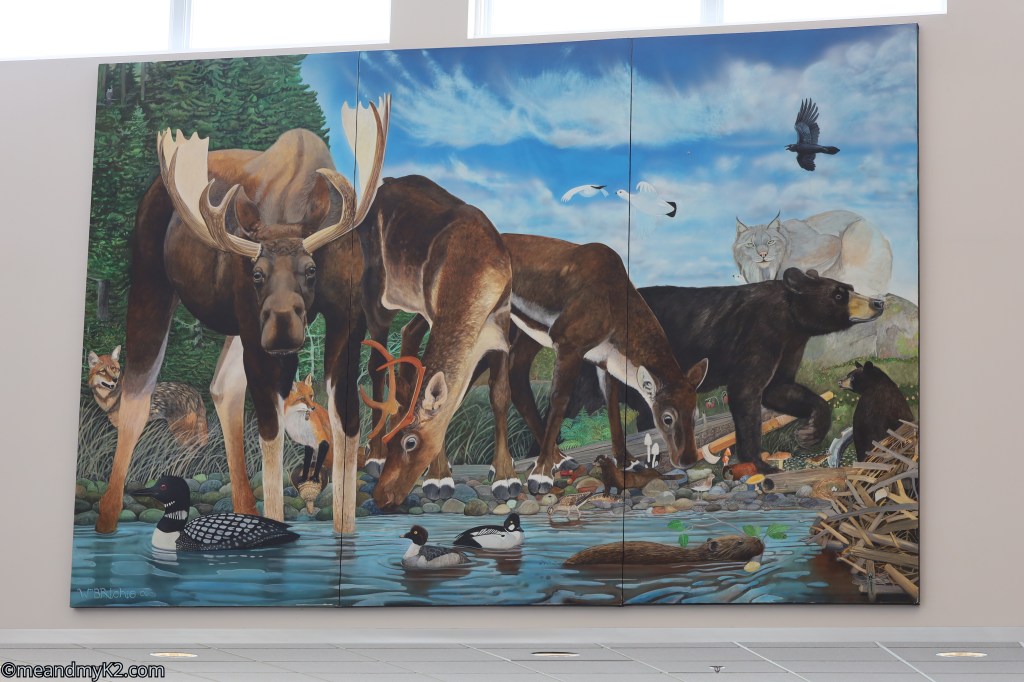
We visited the Discovery Centre, when it was raining cats and dogs, nay bulls and elephants and we decided to pay it a visit to escape it. We acquainted ourselves with the flora and fauna, geology, and history of the Park and did some shopping for souvenirs, including hoodies and t-shirts.
2. the gros morne mountain – 4 Ontario men went up a hill and came down a mountain
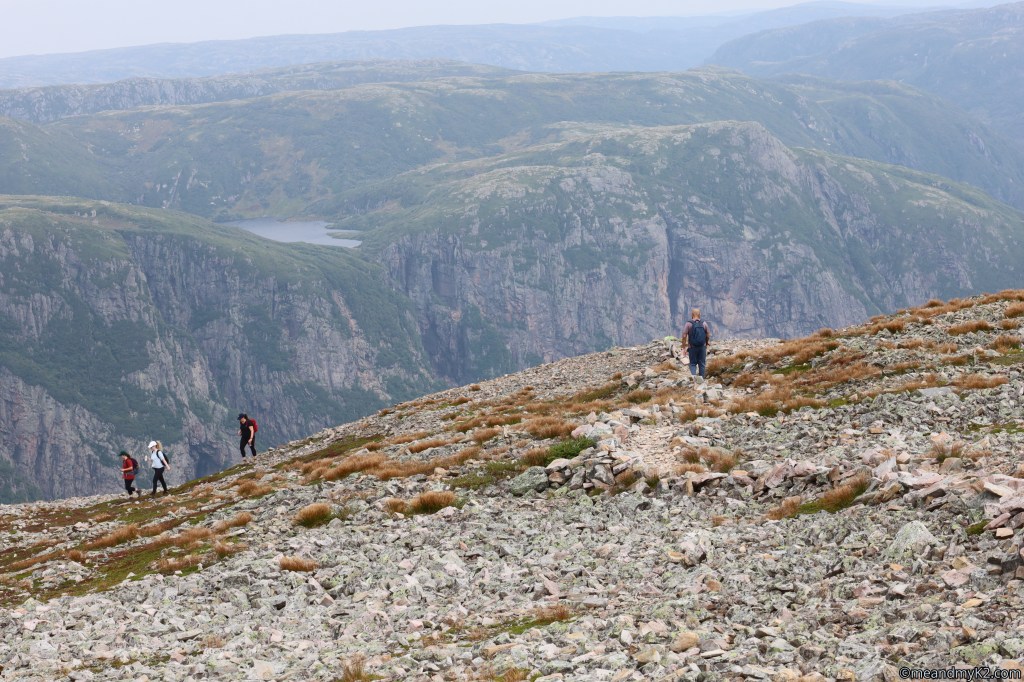
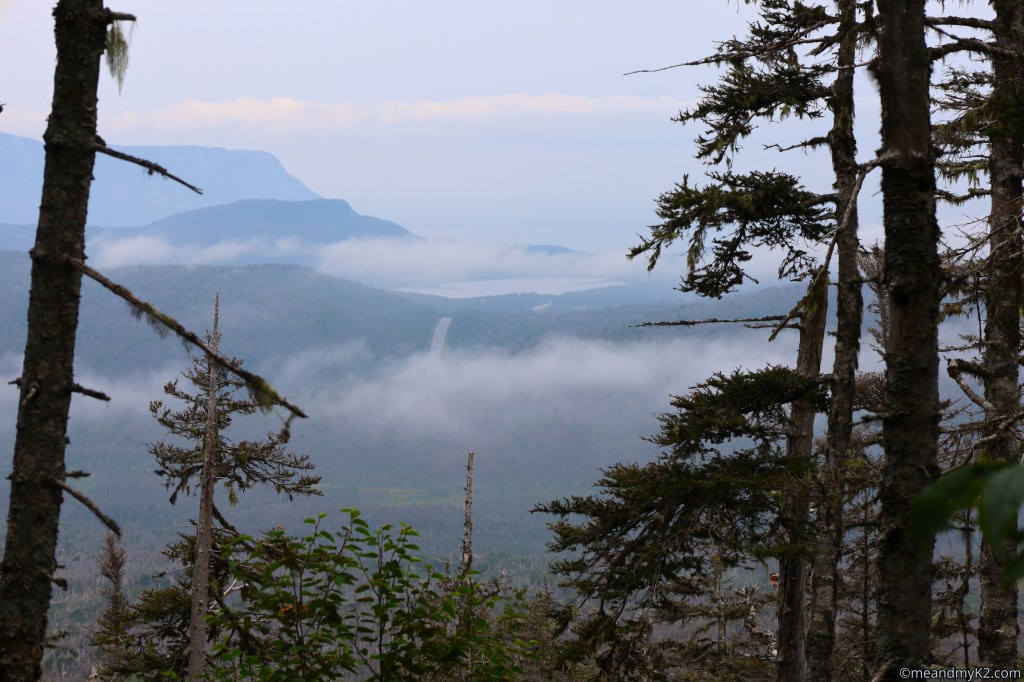
Our ankles and knees took the impact of 13 km of climbing the Gros Morne Mountain at the National Park made to honour it from its almost straight south face and then descending it from the northeast and southwest sides, making a balloon shaped path. This was a challenging hike for us that we were glad that we were able to bag.

Suspension Lake in the far background below.
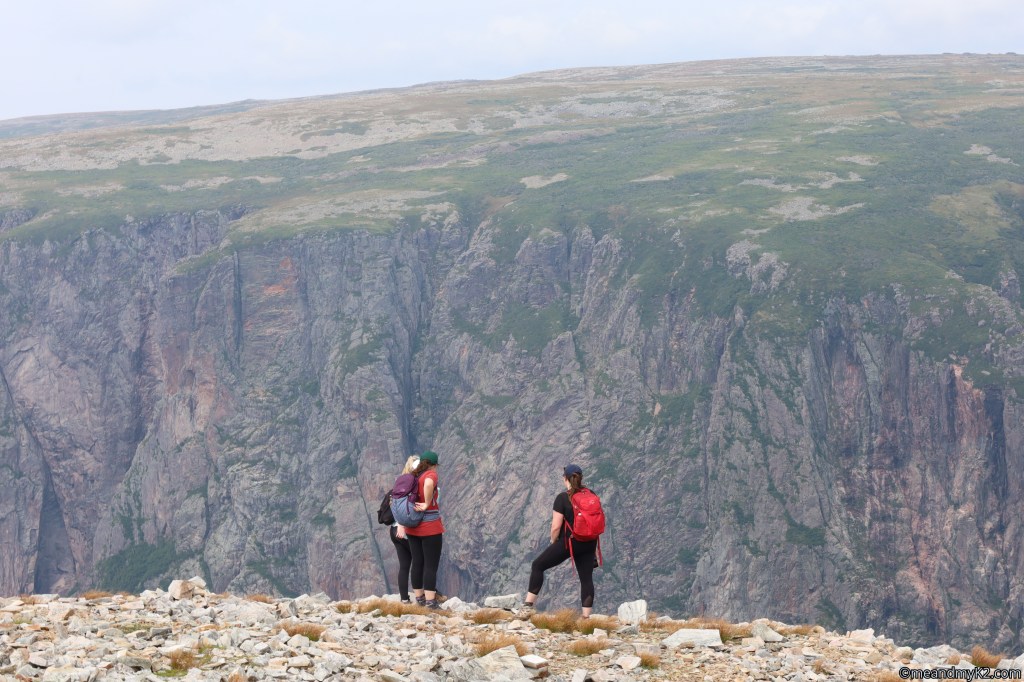
Below: A group of girls looking down into the deep gorge.
The initial trail to the base of the Mountain, 4 km long, offered beautiful scenery, waterfalls like the one that seems to be in the heavens, a river flowing in dulcet tones, and opportunities to see some arctic-alpine flora and fauna.
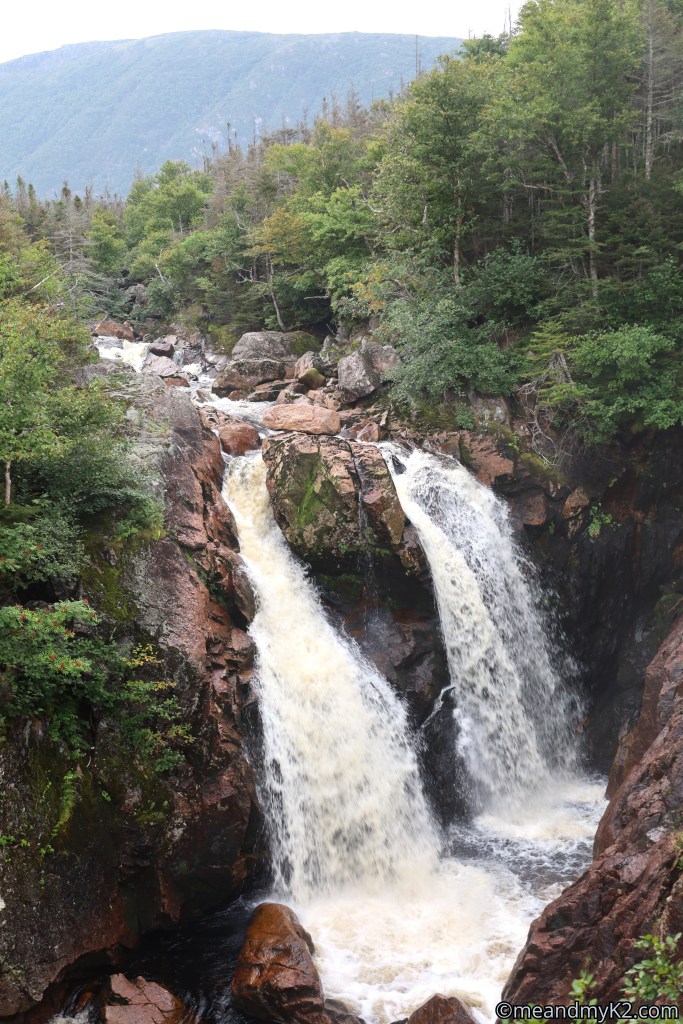

The details of this hike can be read here.
3. a cruise to explore a fjord – much more than ‘the jungle cruise’ and ‘the african queen’
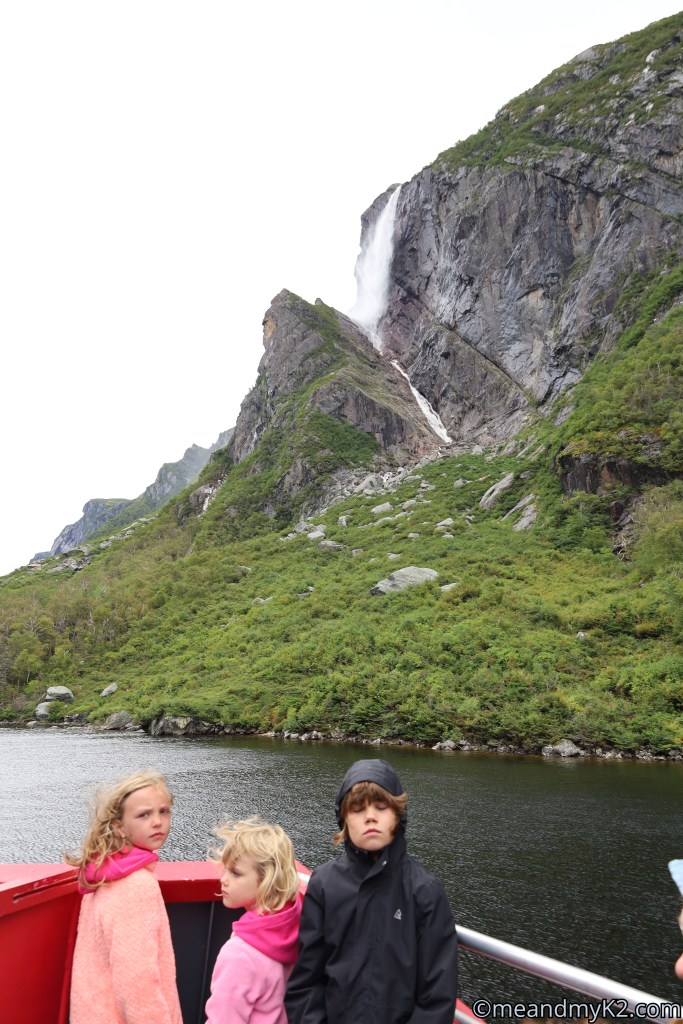
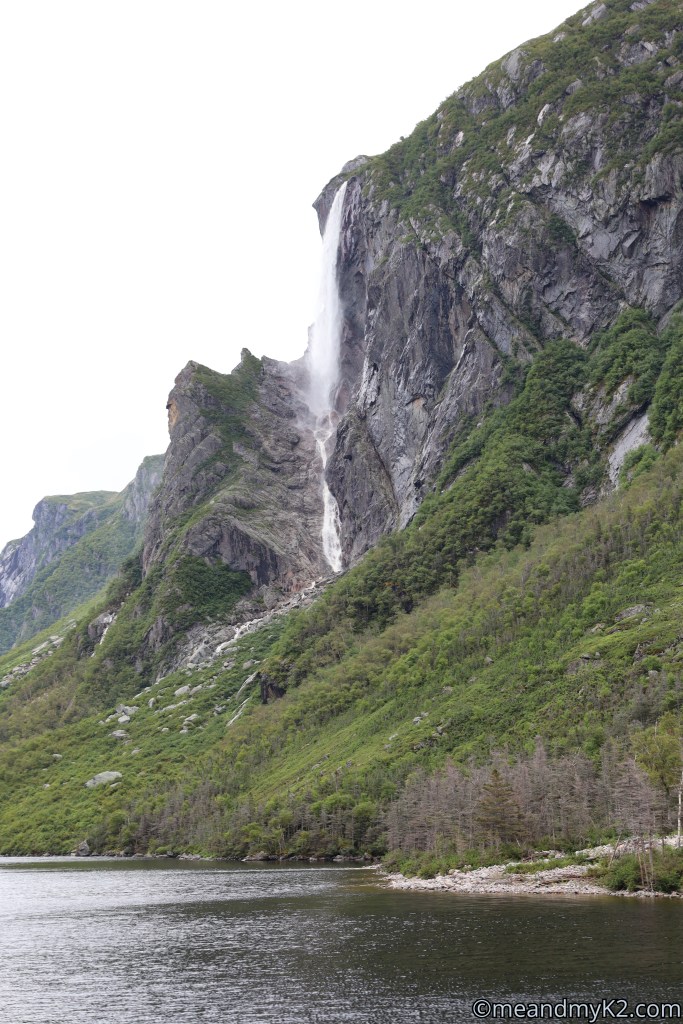
We saw towering mountains and waterfalls that included views of the tallest waterfall of eastern Canada at Western Brook Pond, sailing below them made us feel like Lilliputians in the land of Gargantuan. This is classified as a freshwater fjord and is located in the northern part of the park. Interestingly, we were told that the waters of the ‘pond’ are lifeless.
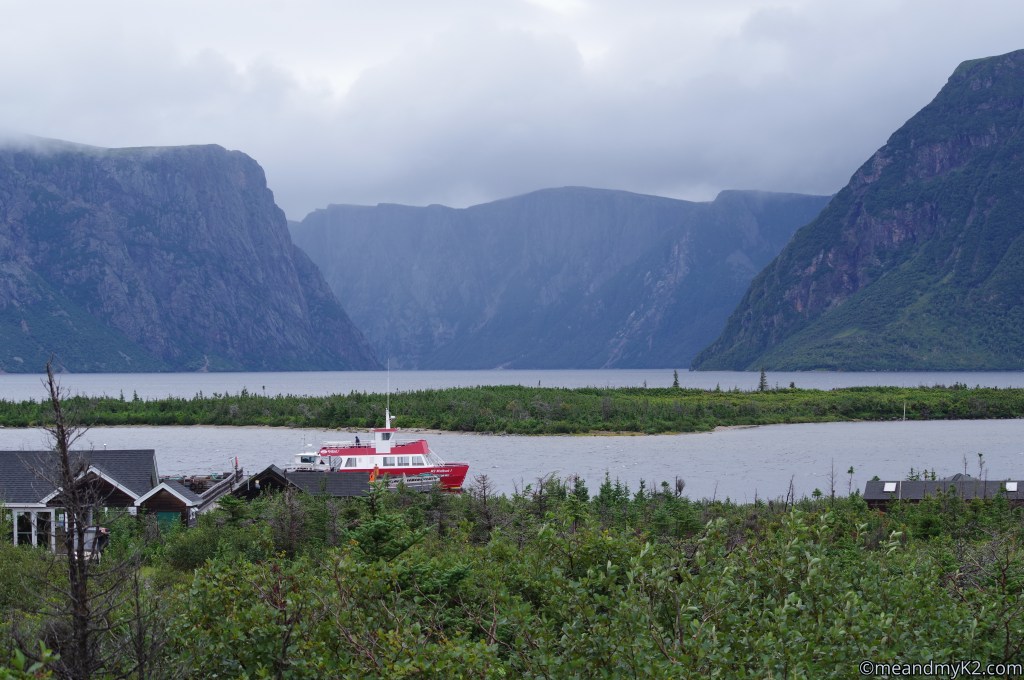

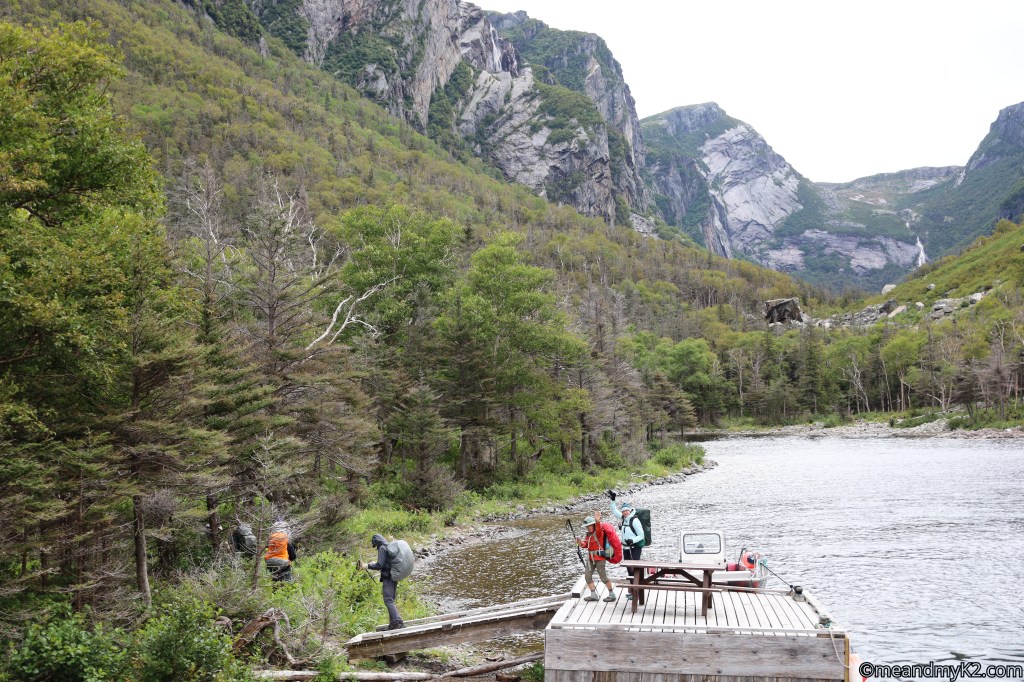
A group of hikers on the cruise disembarked at the farthest corner of the fjord to start their 3 days hiking through the wilderness.
There were certain mountains that had peculiar shaped rock formations. The two below are aptly named the ‘Tin Man’ (right) and the ‘Sleeping Lady’ (left|).


On this cloudy day, we had some nice views of the tallest waterfall of eastern Canada from the cruise ship. Pissing Mare Falls is a tiered waterfall. It is formed from Burnt Woods Brook, which plunges over the edge of Big Level Plateau into Western Brook Pond. At 343 m (1,125 ft) high, with an unbroken drop of 250 m (820 ft), it is the highest in eastern Canada and the 31st highest in Canada.
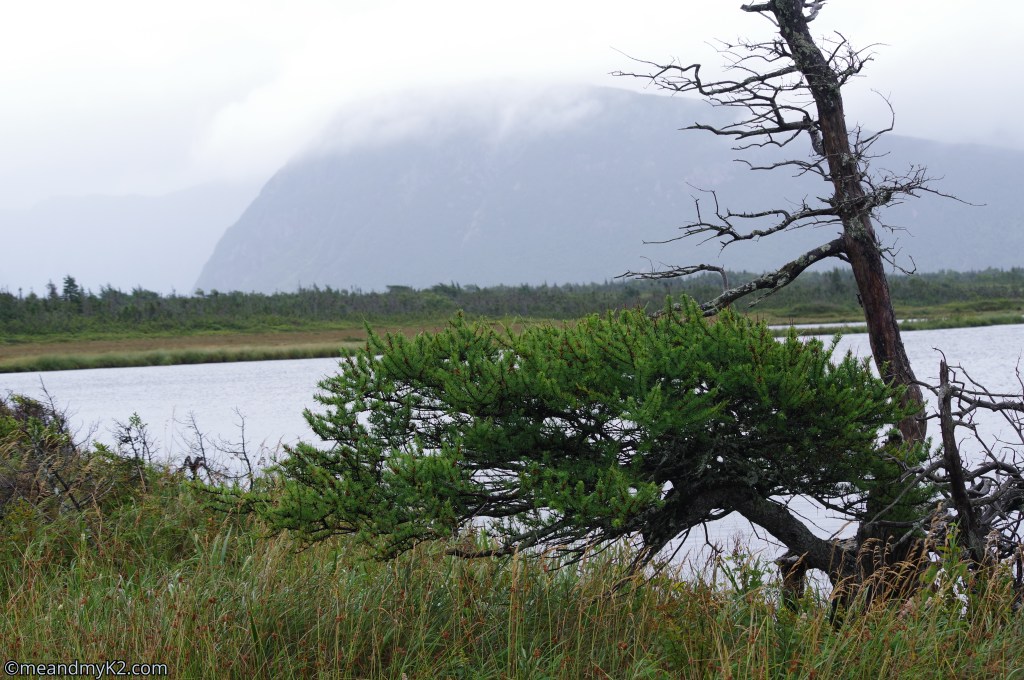
The 6 km return trail to Western Brook Pond itself offered beautiful landscape dominated by arctic flora, several ponds, and mountains under a cloud cover in the distance.



4. the tablelands on a rainy day that reminded us of client eastwood’s ‘unforgiven’
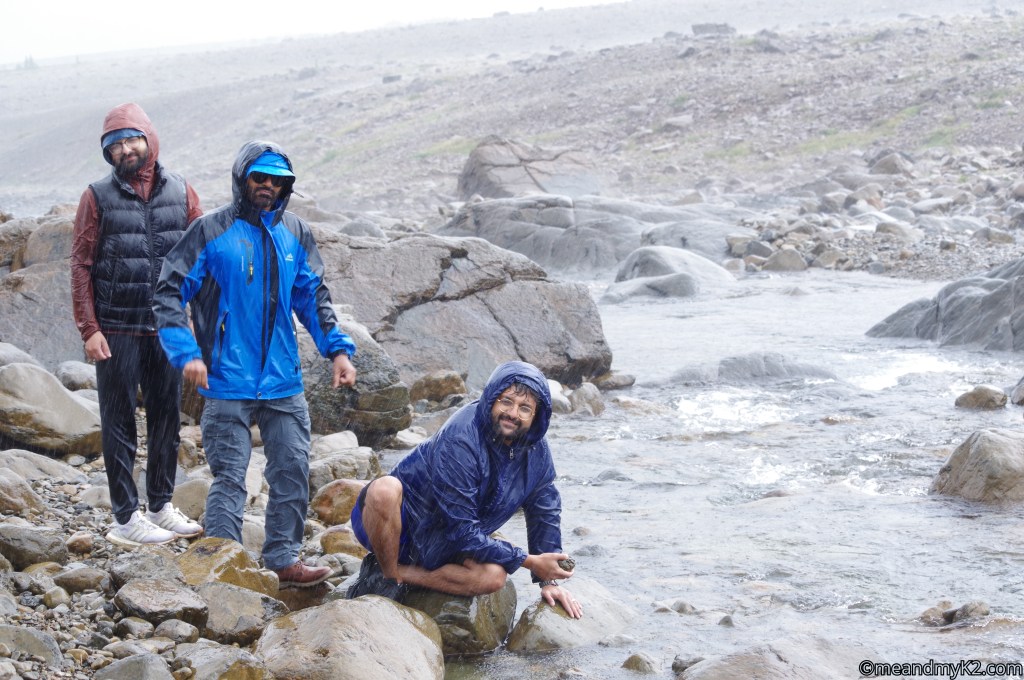
Under a heavy spell of rain that reminded us of the final scenes of the blockbuster Clint Eastwood’s movie ‘Unforgiven’, we followed the main trail that seemed to be an old roadbed as it passed at the base of the mountain. The rain was so heavy that it blocked the panoramic views that the trail promised. We reached the end of the trail at a glacially carved Winter House Brook Canyon where the water was flowing through beautiful rocks.
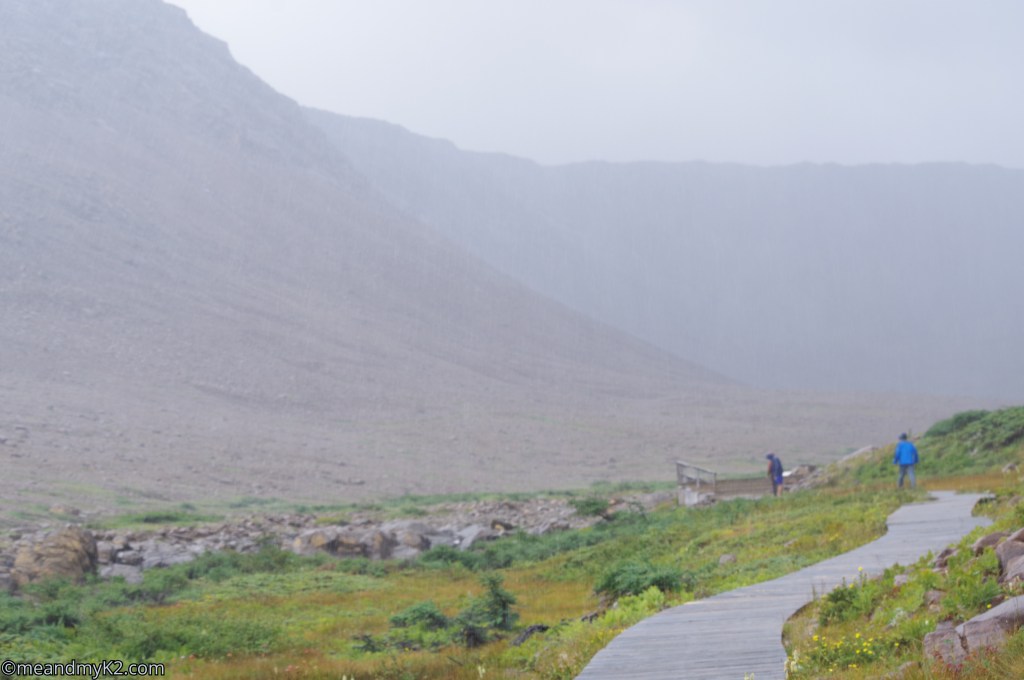
The rocks here were originally beneath an ocean millions of years ago that were pushed up to the surface of the earth by the collision of the continents of Africa and North America.
5. the coastal trail
We started this trail, located in the central region of the park, from Baker’s Brook parking lot, 10 km north of Rocky Harbour on Route 430.
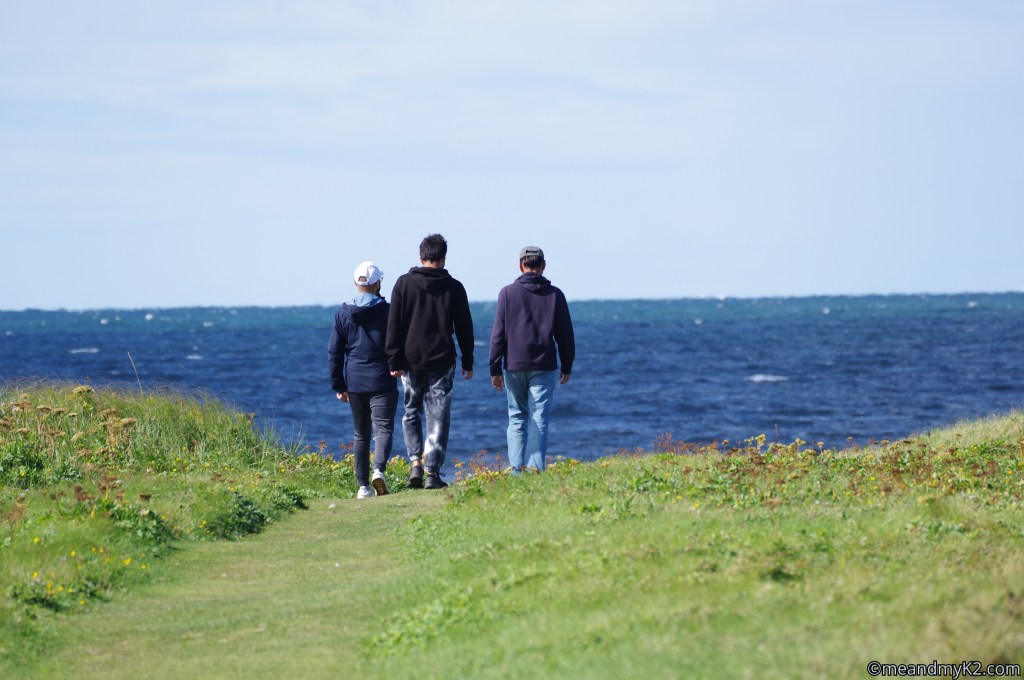
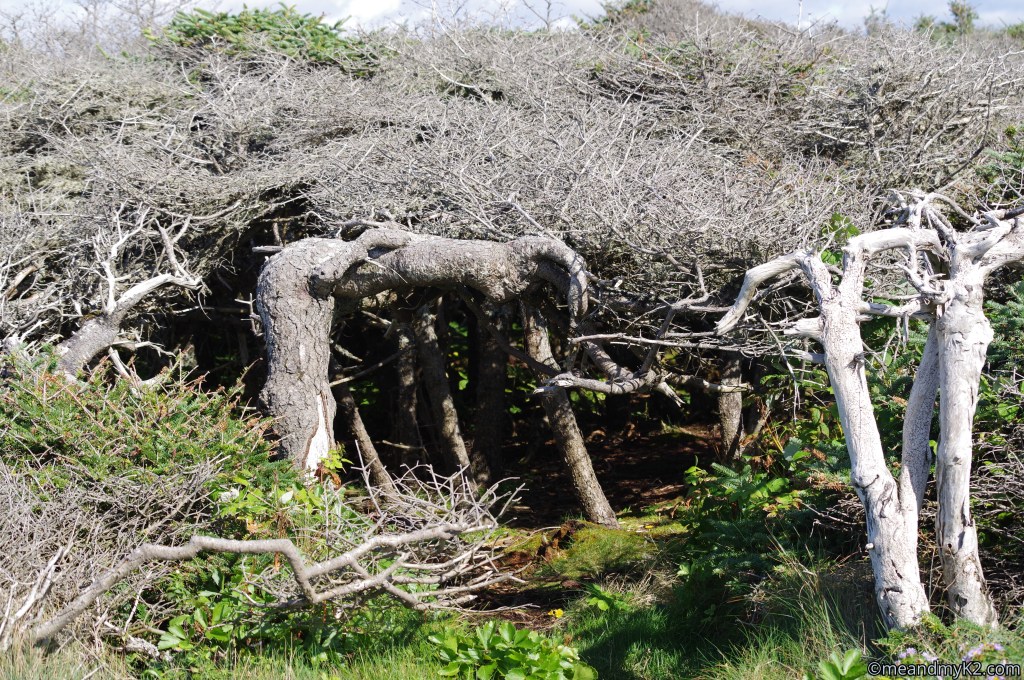
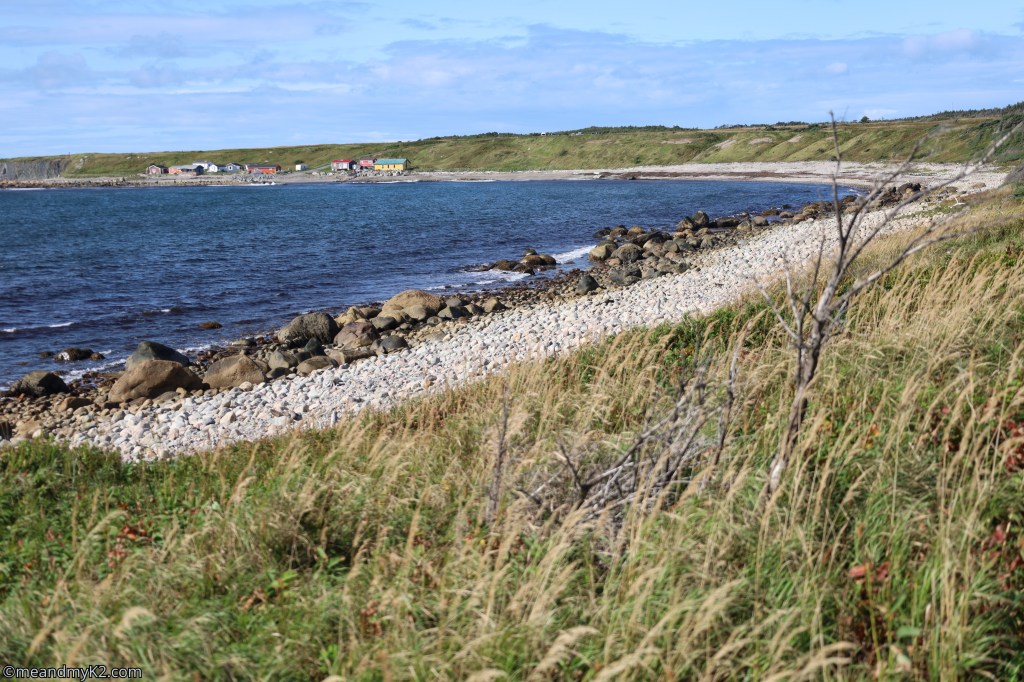
It was an easy trail passing by cobble beaches and through short but dense coastal forests, which we later found out are locally known as “tuckamore.” Tuckamore is the Newfoundland word for the stunted trees that grow along the coast and in alpine areas.
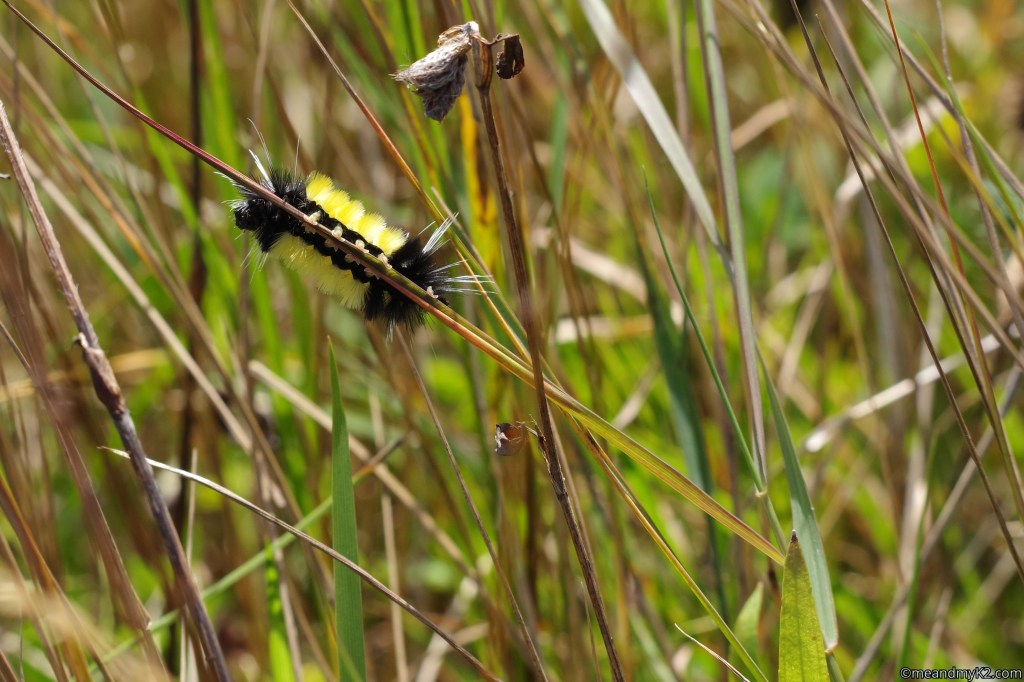
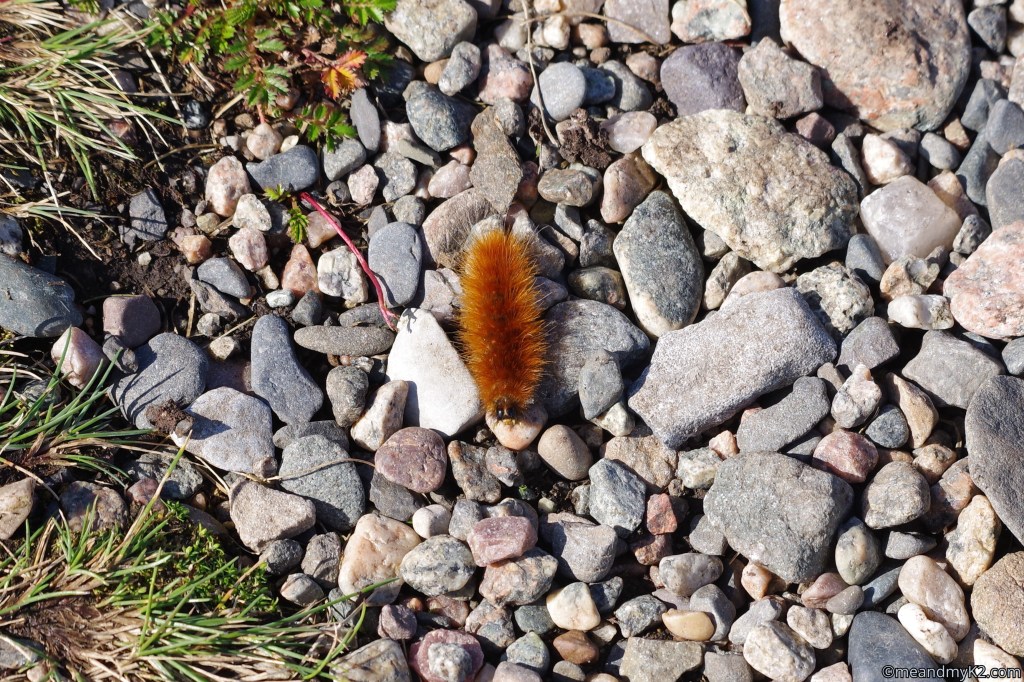
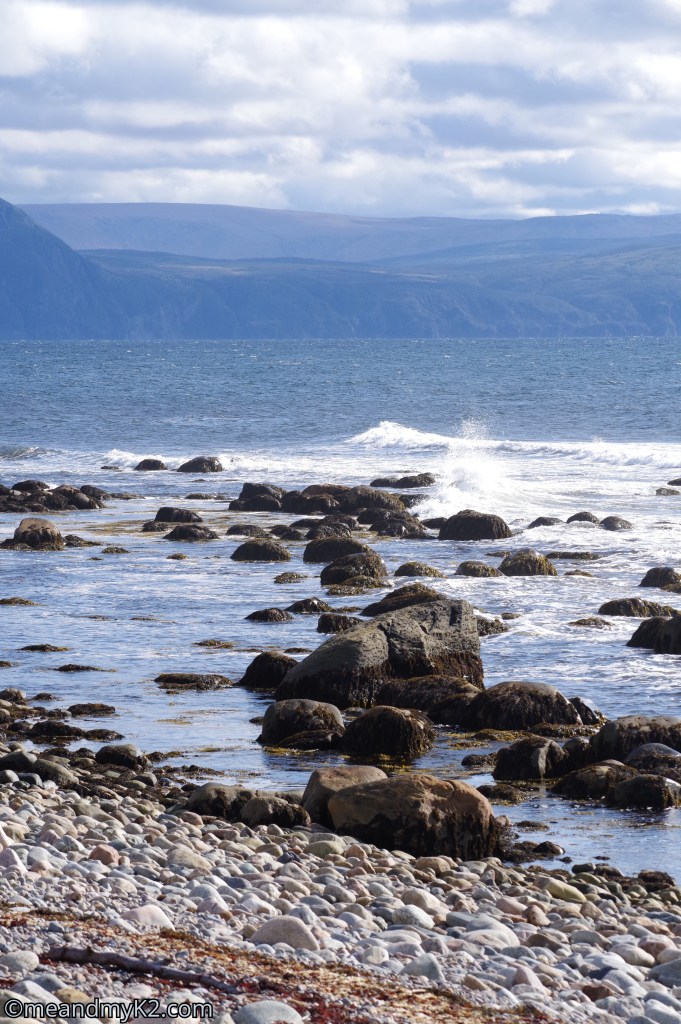
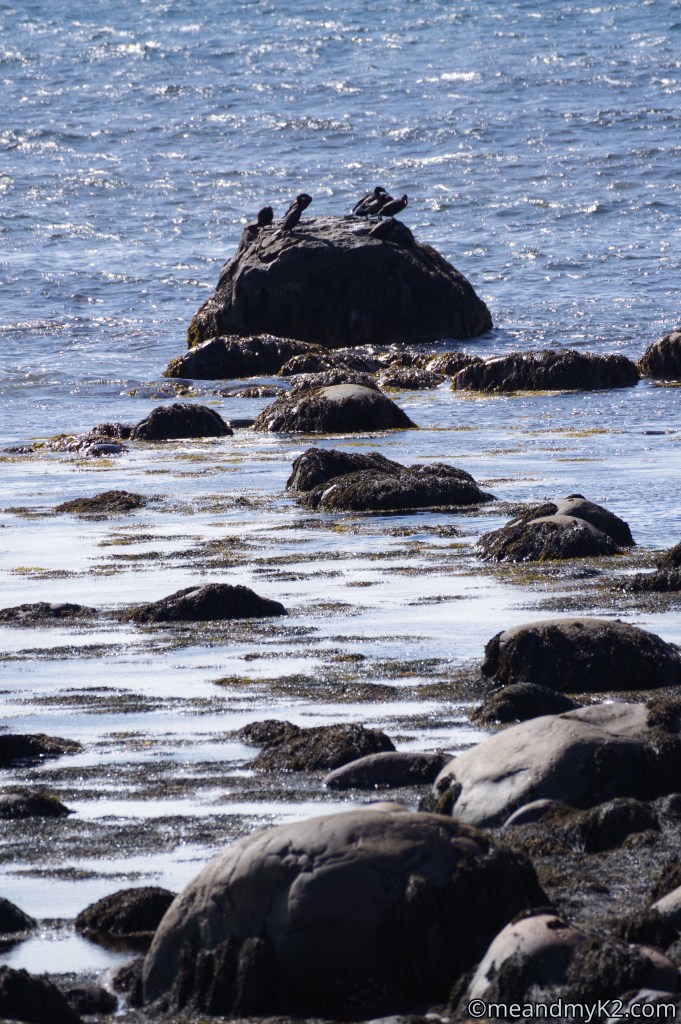
Here, we enjoyed watching coastal landscapes, rocks, waterfowl, a huge pond with ducks, caterpillars, an unnamed river, ocean breezes, and views of the setting sun.



6. the berry head pond trail – the day it rained like in ‘jurassic park’ movie
Located in the central region of the park, we hiked on this trail around Berry Head Pond and through forest and bogs under a heavy spell of rain. The trail offered a mosaic of wetlands, ponds, wildflowers and dense forests that were atypical of any coastal lowlands.
This environment is a good place to look for songbirds, waterfowl, and especially pitcher plants.
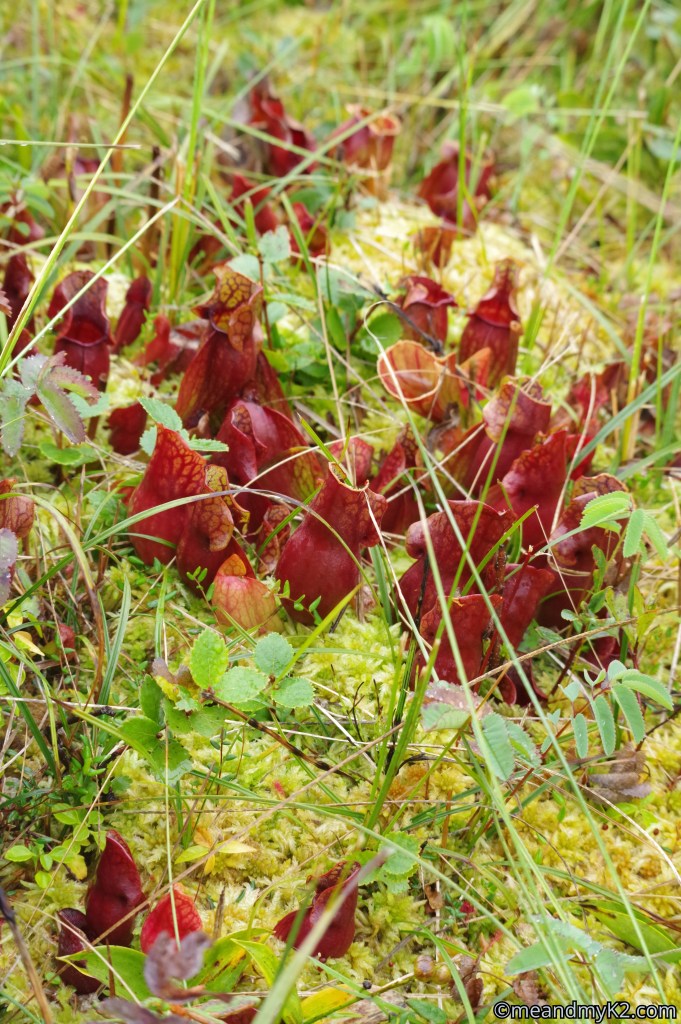

Because of the rain, we could not find any bird except one. However, there were ducks that we identified as golden eyes.


7. Berry Hill trail – not the vertical limit, but CHALLENGING in the rain
We climbed this short 1.2 km return trail to several viewpoints atop Berry Hill. Due to the cloud and fog cover below, we could not enjoy spectacular vistas of the Long Range Mountains and the patchwork of forest, ponds, and bogs of park’s coastal lowlands that were said to be on the plate for us.

Berry Hill is a low rock knob that was an island during higher sea-levels just after the last ice age. Rocks polished by waves 10,000 years ago are still visible on its flanks.

lobster cove head lighthouse and trails
We visited this century old lighthouse that once served as a beacon to safely guide fishermen and sailing vessels into Bonne Bay. We visited this exhibit that highlights the people and heritage of the area, showcasing historical photos, audio recordings of folk songs and lightkeepers logbooks. We met a young guide who educated us about the history of the area, lightkeepers families, what used to be life along the coast and answered our questions on many topics.


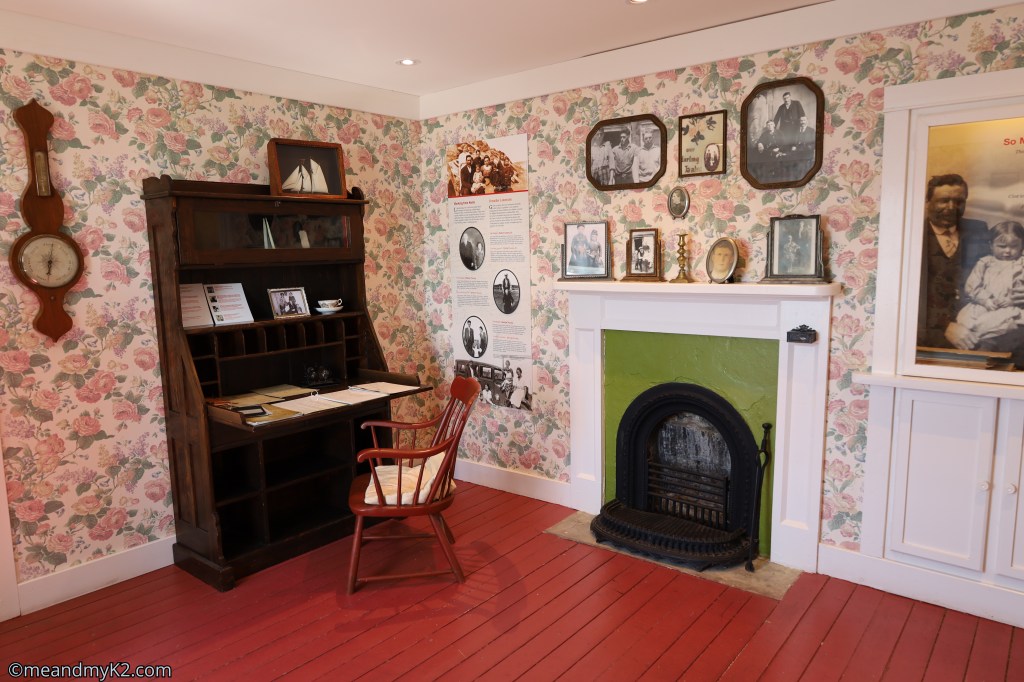
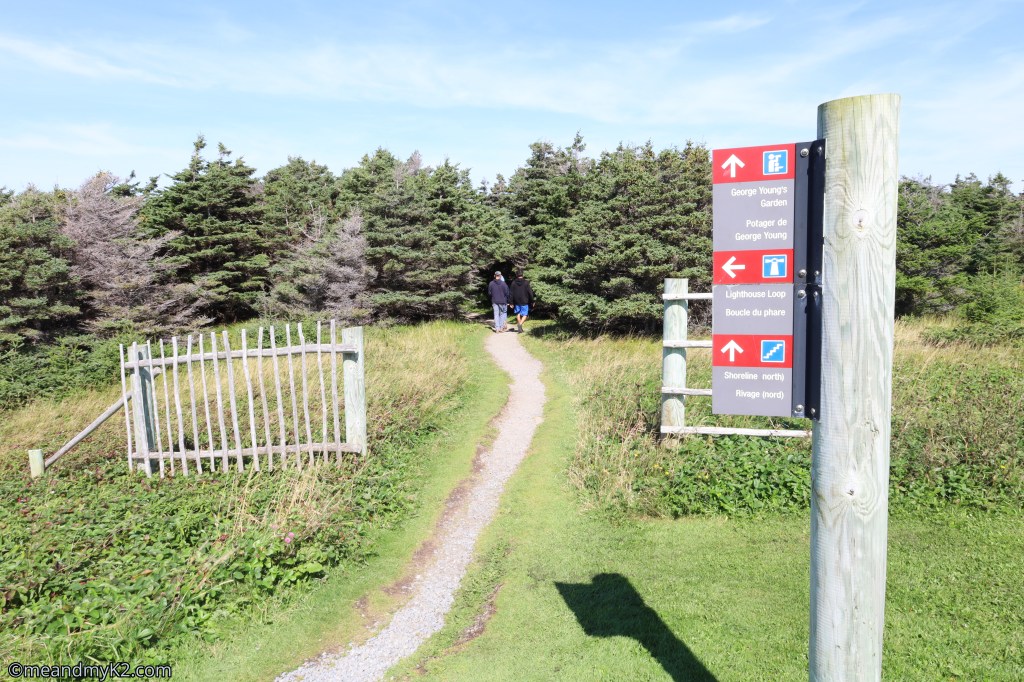
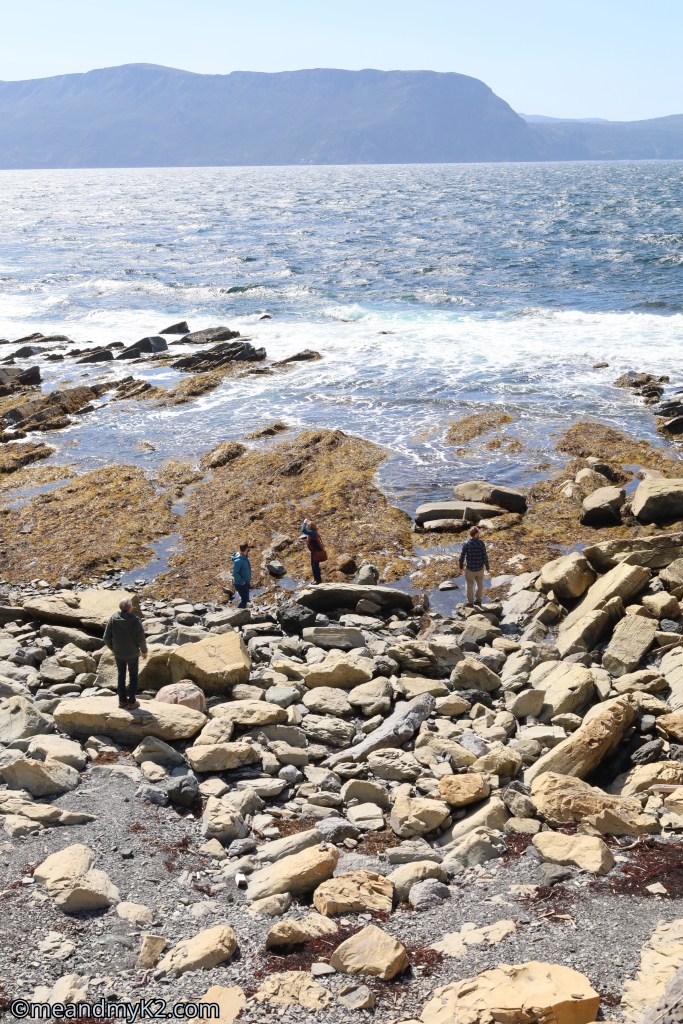
Next we hiked on two small winding trails through tuckamore forests. We noted the effect that wind and water had on the trees along the top of the shoreline. Finally, since the tide was low, we headed to the beach and walk over sedimentary rock that were piled up there.



green point ecological site
As we were exhausted after a long day of cruise and hiking, we were not able to spend a lot of time at this UNESCO World Heritage Site. Here geologists discovered fossils that define the boundary between the Cambrian and Ordovician periods and that make Green Point a world geological benchmark.
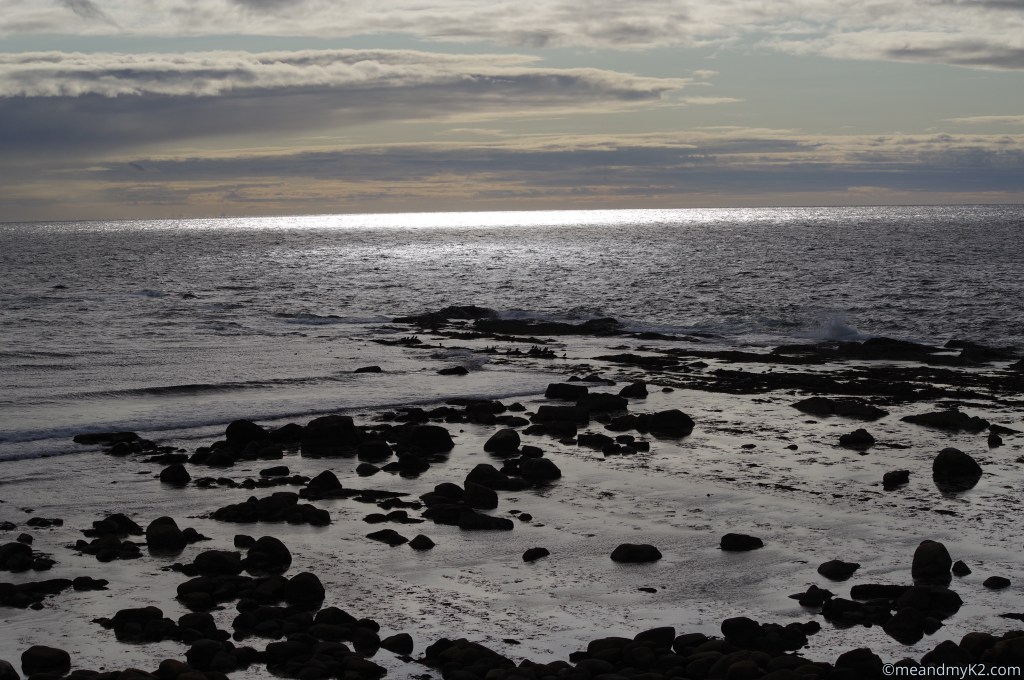
The views of the St. Lawrence Gulf with sun rays reflecting off the waters were captivating.
where to stay
We stayed at a BnB (first photo below) in Rocky Harbour, a touristy fishing town located in the park conveniently by the route 430.

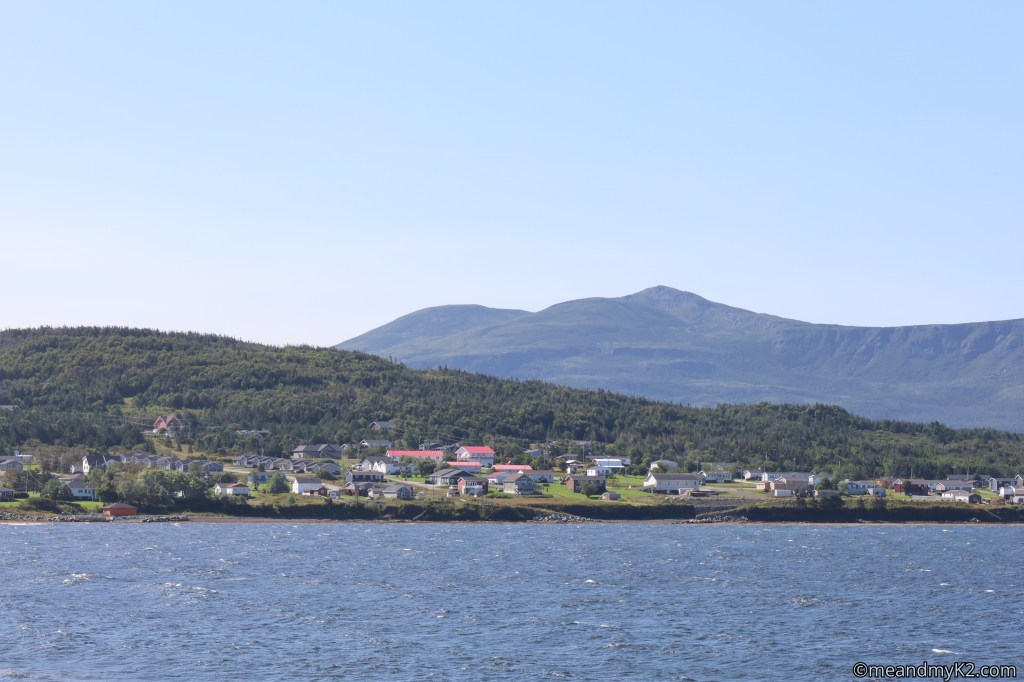

The village has several restaurants, souvenir shops, grocery stores, a gas station.

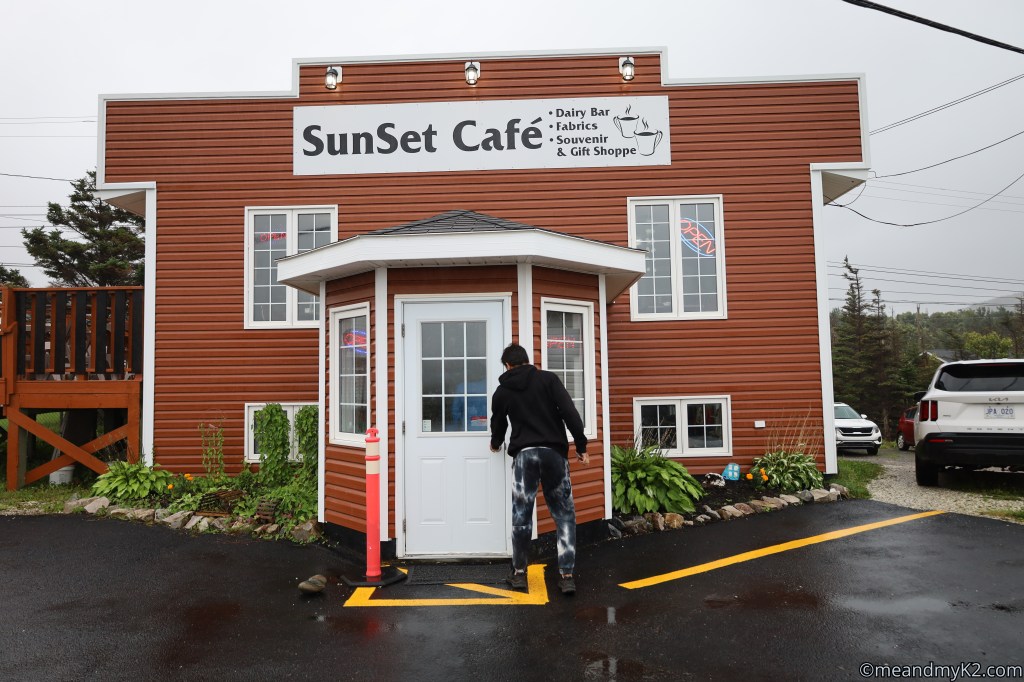

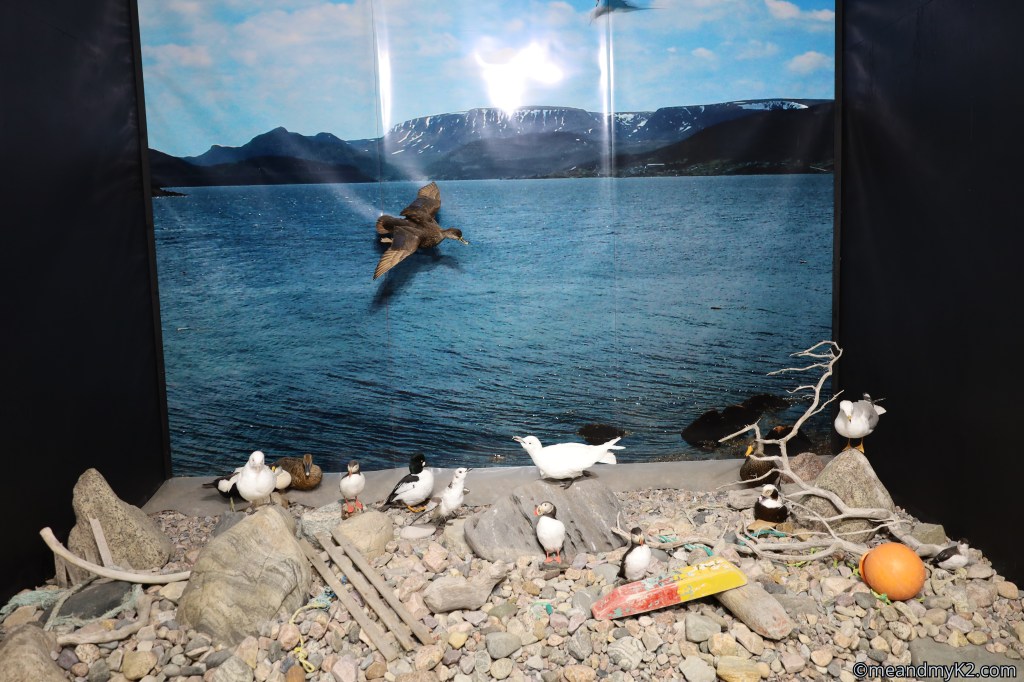
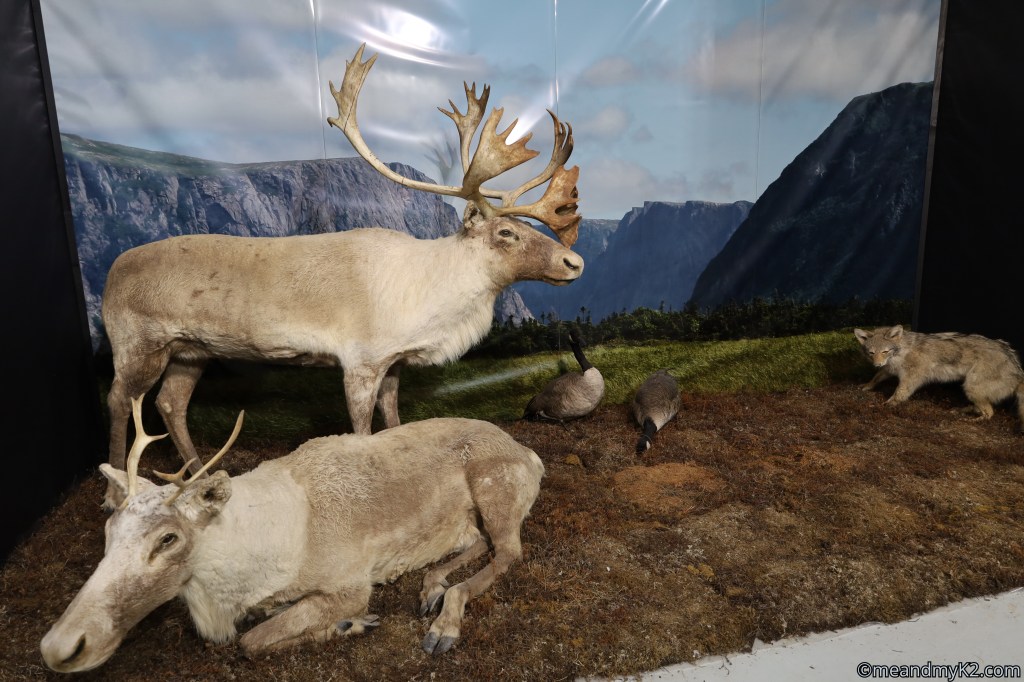
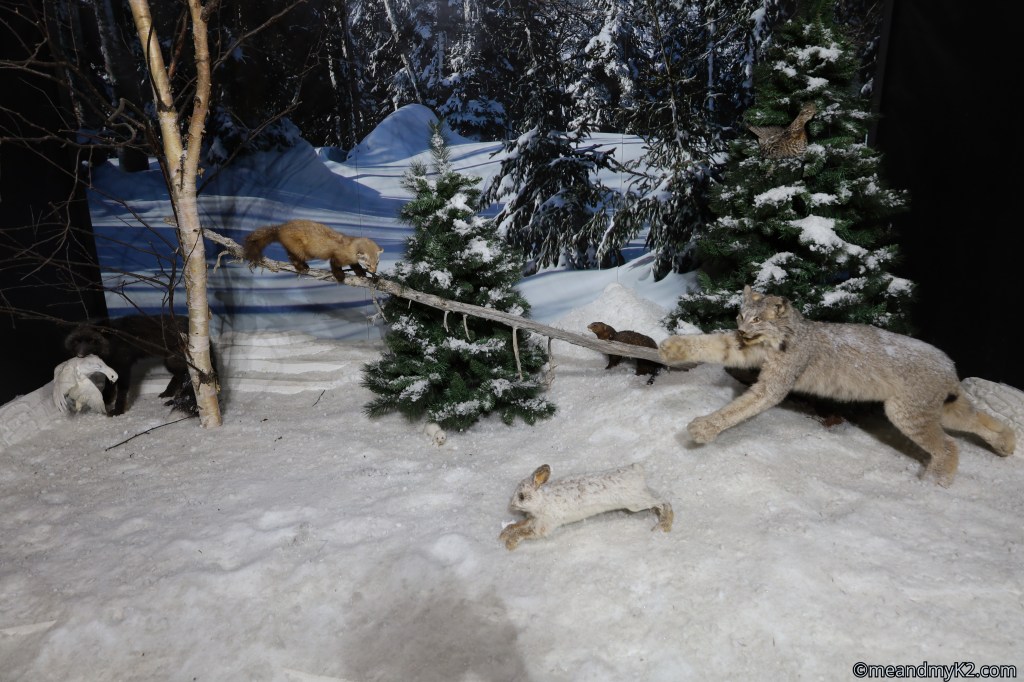
Gros Morne Wildlife Museum was right next to our BnB that we visited on the last day of our stay in the park.
Newfoundland, and Gros Morne National Park has the most moose per sq. km in the world and yet we were not able to see any during our stay in the park. We were able to see animals, albeit in the stuffed form, in this museum that we could not see in the wild.

final words
Until our next blog, au revoir! Be outdoorsy, embrace diversity, and support causes for the conservation of nature!
 K2, the Kuvasz, and me