
Although it had been raining continuously for the past few days, K2, our Hungarian Kuvasz, and the rest of us, 20 in all, were making good progress on the trail around the lake. We came to a section no wider than a meter (3 feet) with a wall of the ridge on the right side and a slope towards the lake waters on the left. I knew K2 very well. He was on leash as usual, but was behaving erratically on the trail changing the sides all the time, perhaps getting into a state of ecstasy due fall season ‘aroma’ of decaying plant matter. A little pull from him would have taken both of us down into the cold water of the lake.
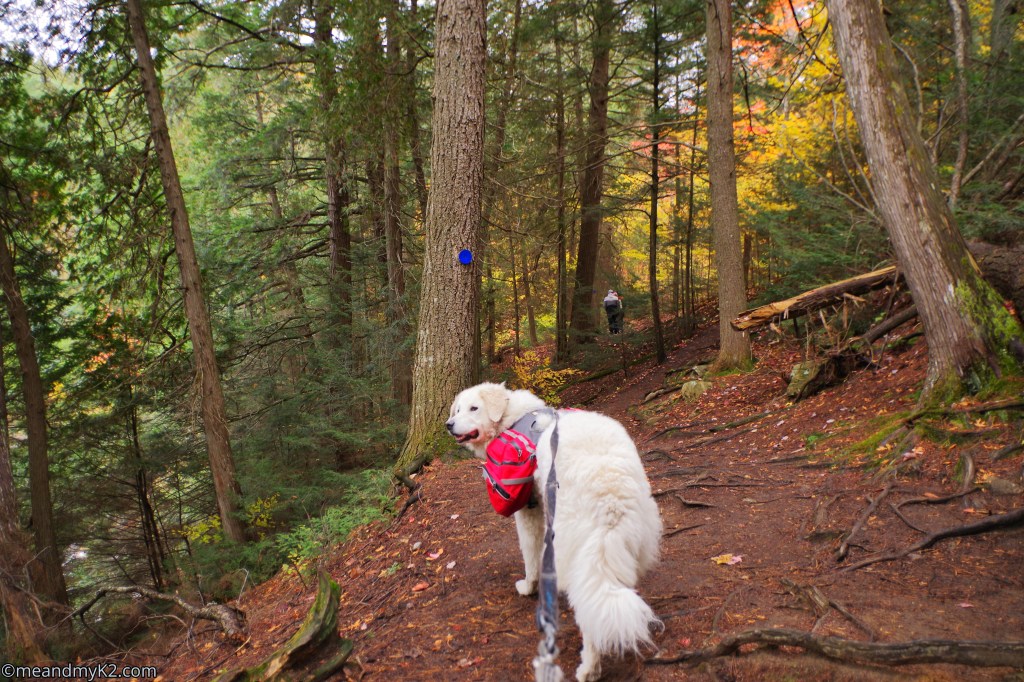
I decided to climb up the slope so that took us further away and drastically lag behind the rest of the entourage. The hike turned out to be of moderate difficulty. I had to continuously negotiate low branches bearing fall colour leaves and the roots of those trees running on the ground due to thin soil.
We were hiking a loop around Peck Lake in Algonquin Provincial Park.
Dorset Lookout tower
The tower is located on top of a hill that itself offers beautiful views of the landscape below.
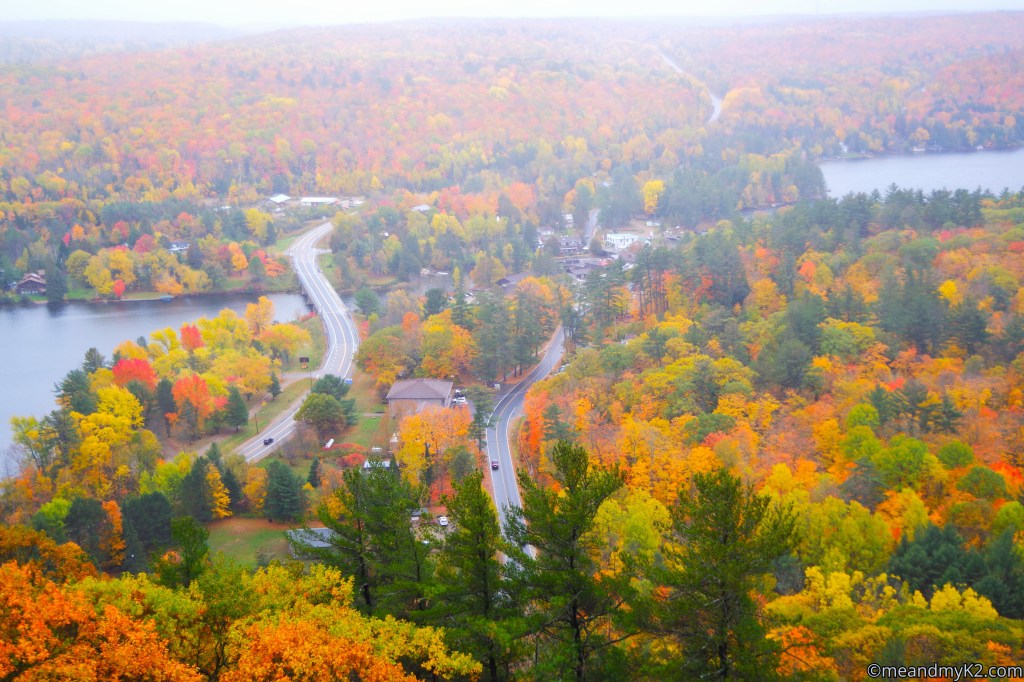
Due to the regulations, K2 could not climb the tower with us. Luckily, some women in the entourage agreed to stay with him over the hilltop.
It was cold on top of the hill and brutally cold on the top of the tower. I was able to take a few photos of the landscape. Due to the rain and fog, colours did not come out as brilliantly as they would otherwise.
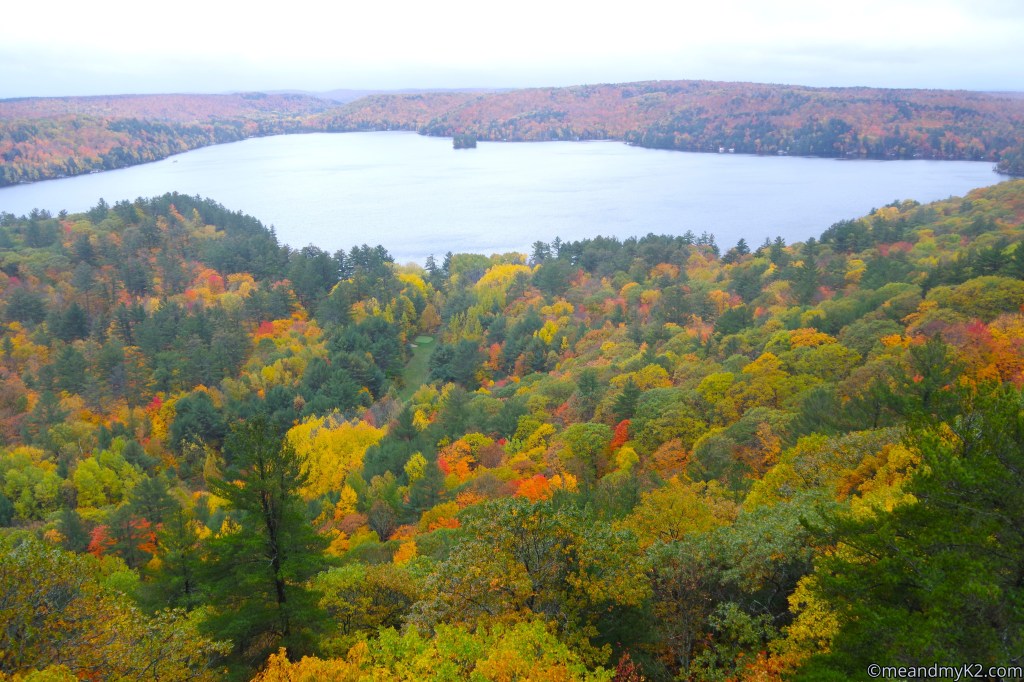
However, it is true that Fall season is the only period when plants do not lose out to animals in terms of their attractiveness. In the summer, everyone goes, “oh look at that bear’. In fall however, everyone goes. “Wow! Look at those leaves”. It is the trees that attract us in fall season, beautifully captured by Albert Camus through emotions like these, “autumn is second spring when every leaf is a flower”.

Why do leaves change colour in autumn?
Leaves appear green because of the abundance of chlorophyll. Light regulates chlorophyll production, so as autumn days grow shorter, green colour starts to fade from leaves. At the same time, surging sugar concentrations cause increased production of anthocyanin pigments. Leaves containing primarily anthocyanins will appear red. Those containing carotenoids can be orange, yellow, or red, but most of these pigments found in leaves are yellow. Leaves with good amounts of both anthocyanins and carotenoids will appear orange.

Other plant chemicals also can affect leaf colour. An example includes tannins, which are responsible for the brownish colour of some oak leaves.
algonquin provincial park
The next destination for the entourage was the most well known provincial park of Ontario. With its 7,653 sq. km of area and features that include a very diversified flora, fauna, landscape features, and natural, cultural and geological history, this Park would easily qualify as a national park in any other country.
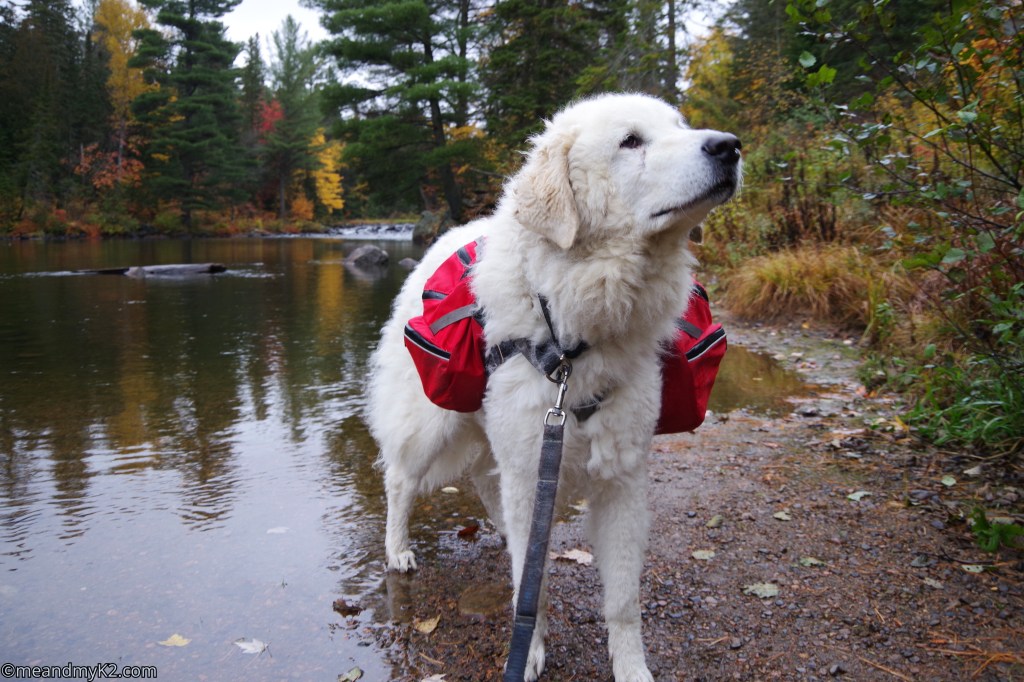
tea lake
Our first stop in the park was Tea Lake , which is located at the 8.1 km marker on the north side of Highway 60.
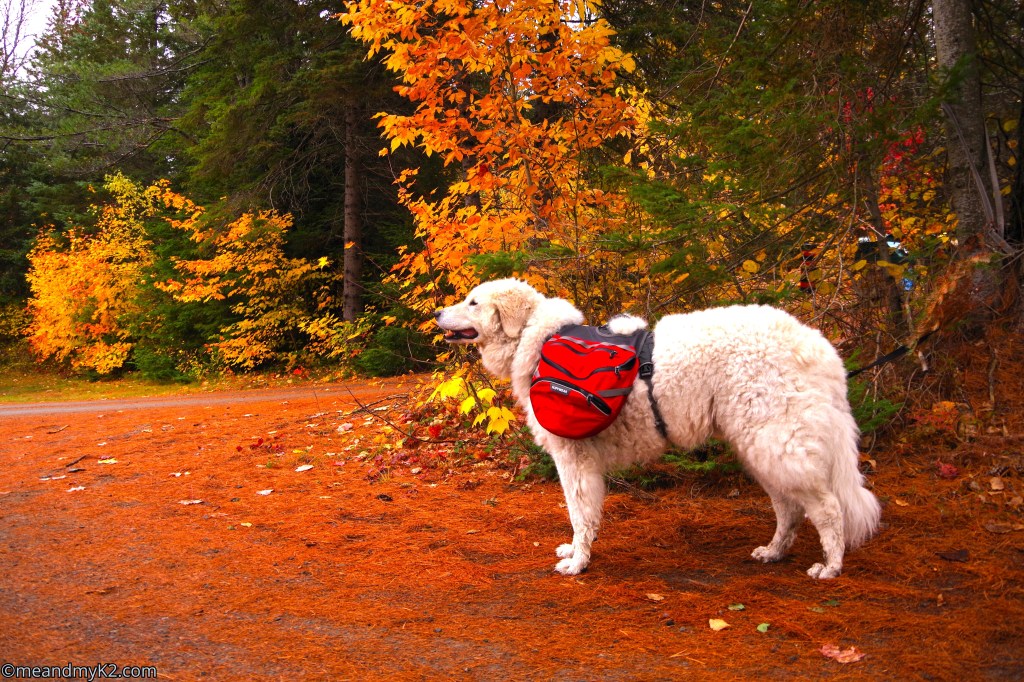
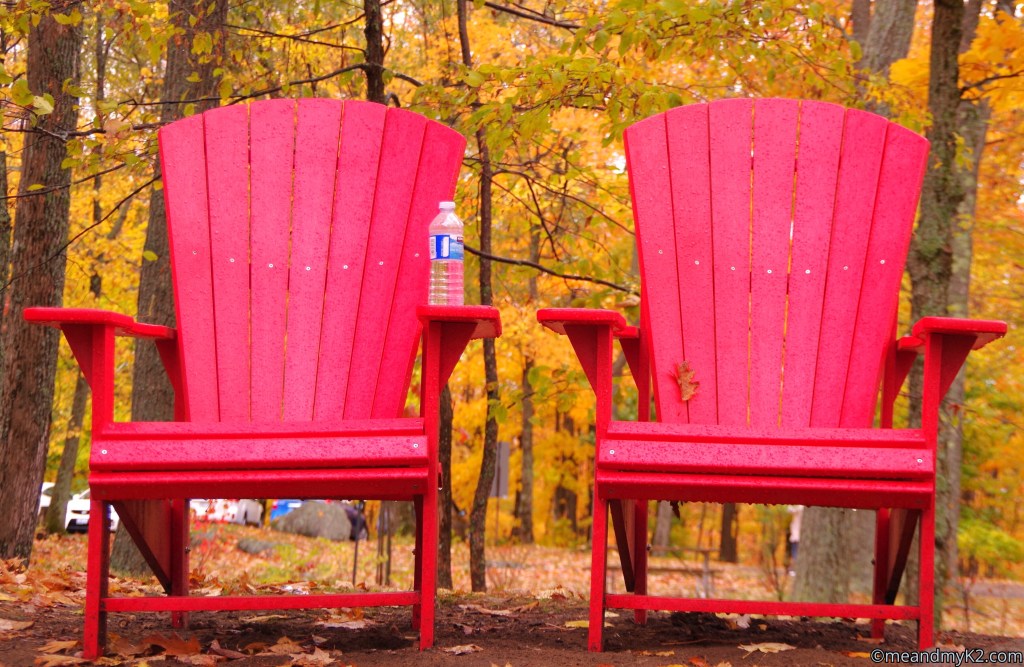
Since the Tea Lake Dam picnic ground came soon after we entered the Park, we decided that it was a good spot for having a brunch. The fall season scenery, although it was a week after peak fall colours, was still beautiful. The younger folks in the entourage and K2 stretched themselves.
Despite their heavy winter layers, I bet K2 was more comfortable in the cold than the kids were.

peck lake
Our second stop in the park was at Peck Lake. The Peck Lake trail is located at the 19.2 km marker on the north side of Highway 60.
We were an entourage of over 20 cousins and families, who hiked on this trail. The 1.9 km trail meandered around the Peck Lake periphery through a serene surroundings dominated by a coniferous forest. Hiking on this trail turned out to be ‘Moderate’ level.

We hiked with K2 on a 4 meter (12 feet) leash and held on to it in a manner that it could be released as and when needed in cases either K2 or I slid down the slope. Luckily, we did not as I played with the length all the time, asking K2 to be behind me when going down the slopes and ahead of me when going up.
algonquin art centre
Our third stop was at Algonquin Art Centre, which is located at the 20 km marker on the south side of Highway 60.
We found the Algonquin Art Centre a world-class art gallery showcasing Canada’s foremost wilderness and wildlife artists both inside the building and outside. Built upon a long tradition of artists in Algonquin Park, the Centre puts on annual exhibits that explore the connections between artists and Canada’s wilderness parks.

We walked on the pedestrian walkway outside to see the exhibits about Tom Thomson, the naturalist and artist.

pog lake
Our fifth stop was at Pog Lake that is located at 36 km mark and comes on the south side of Highway 60.
There are a number of campgrounds in the Park. If you have first timers, children and / or dog(s) in the group then I would recommend booking a campsite along highway 60 and for car camping, Pog Lake appears to be the best.

We had our car camping here on the long weekend in October 2021. Unfortunately, we had everything going wrong. It was raining and because of the fall colours, the Park and the camping area were over-crowded and noisy.
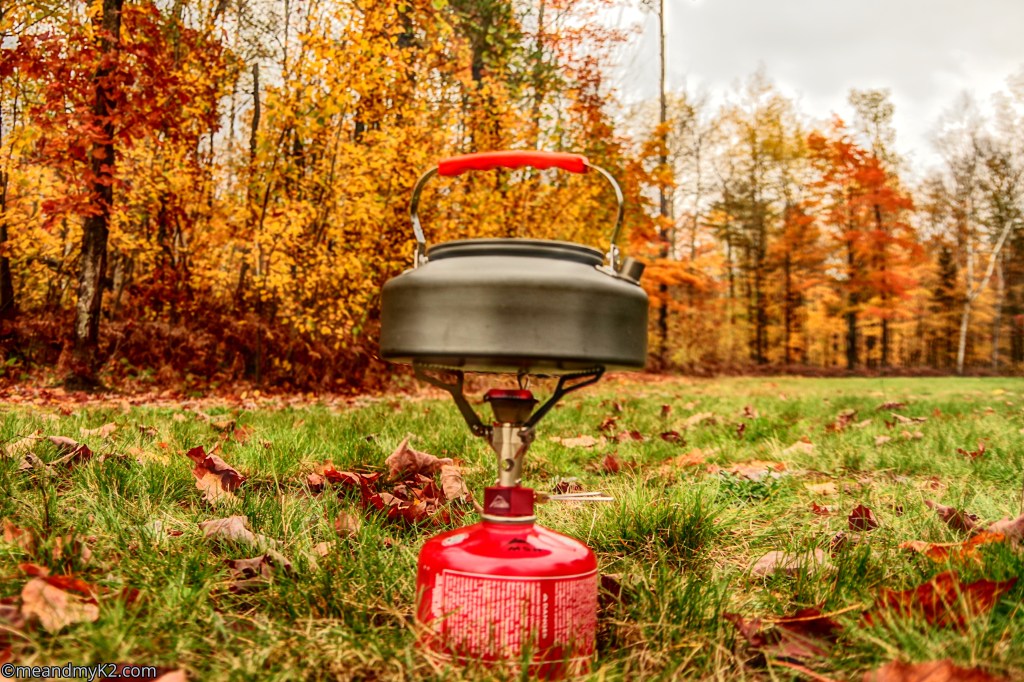
We put up our tents, nevertheless, prepared and ate supper, had our tea, and went for a hike along the lake.
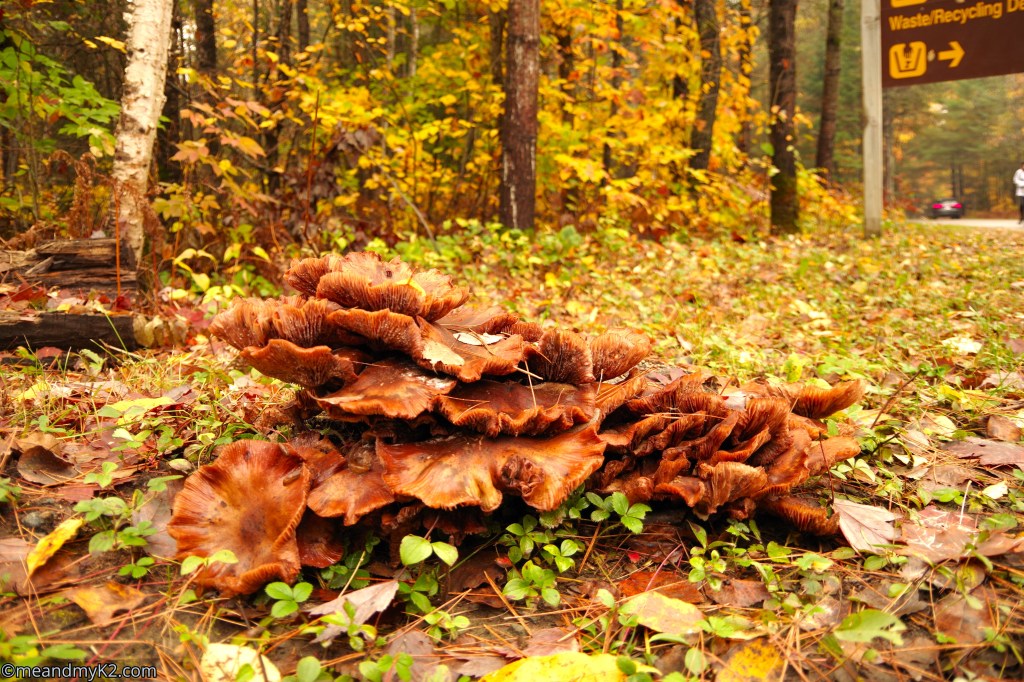
big pine trail
Our sixth and final stop was at Big Pine trail, which is located 40 km on the north side of Highway 60.

Several pines on this trail are 230 years old. Some exceptionally old trees were fenced in.
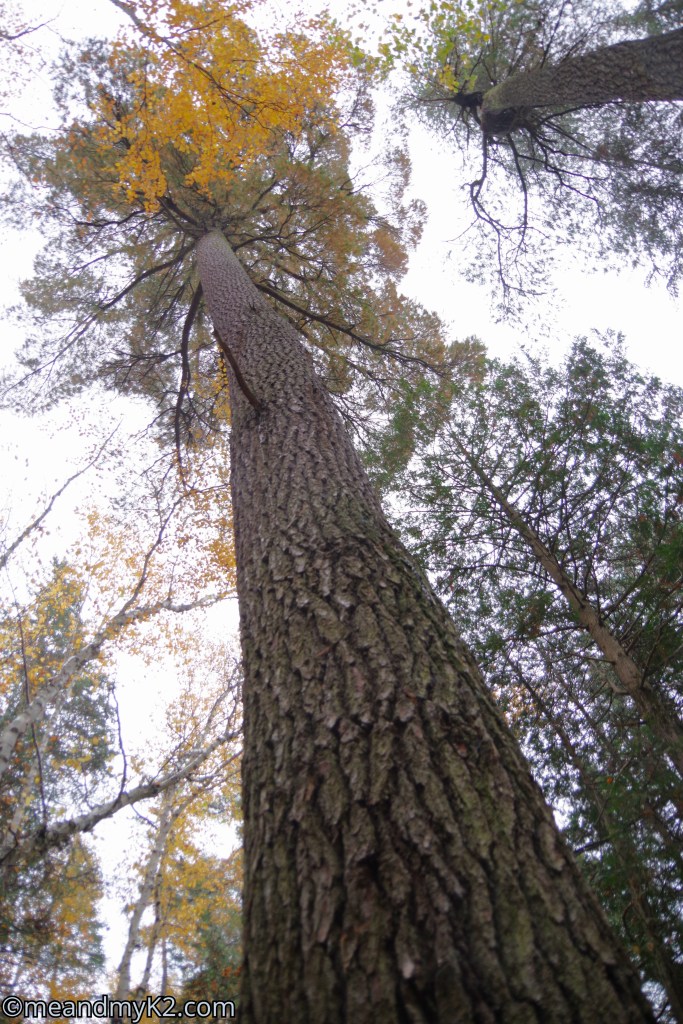
Except at the beginning where some hiking families with kids were returning, K2, my son, nephew and I were the only people on the trail. We covered the 2.9 km trail under adverse conditions.
It was raining cats and dogs, we had to make our way through muck and water puddles, the rocks were slippery, and the roots of the tree protruding above the ground due to thin soil were hidden by fallen leaves.

last words
Until our next blog, cheers! Be outdoorsy, embrace diversity, and support causes for the conservation of nature!
 K2, the Kuvasz, and me