

A cougar is more than a match for a single medium, large, or even a giant size dog
Austin Forman, 11 years old, was hauling firewood in his backyard on the weekend, when his golden retriever, Angel, began acting weirdly. Father of the boy was watching both of them.
This behaviour explained itself when a hungry cougar came out of forest and charged Austin. However, Angel was ready and challenged the cat. The boy escaped inside his home while the two animals battled for several minutes. The cougar had the dog by her head. They could hear both the dog and the cougar screaming. Then it went silent.

Austin Forman Fan Site)
RCMP Constable Chad Gravelle rushed to the scene. He stepped into the backyard and saw that the cougar, a young, skinny female, had dragged Angel under the porch. He shot the cougar. The dog was laying there lifeless. As the family gathered, consoling Austin, the dog suddenly sprang up. She coughed a bit of blood, started wagging her tail, snuggled up to Austin and licked him.
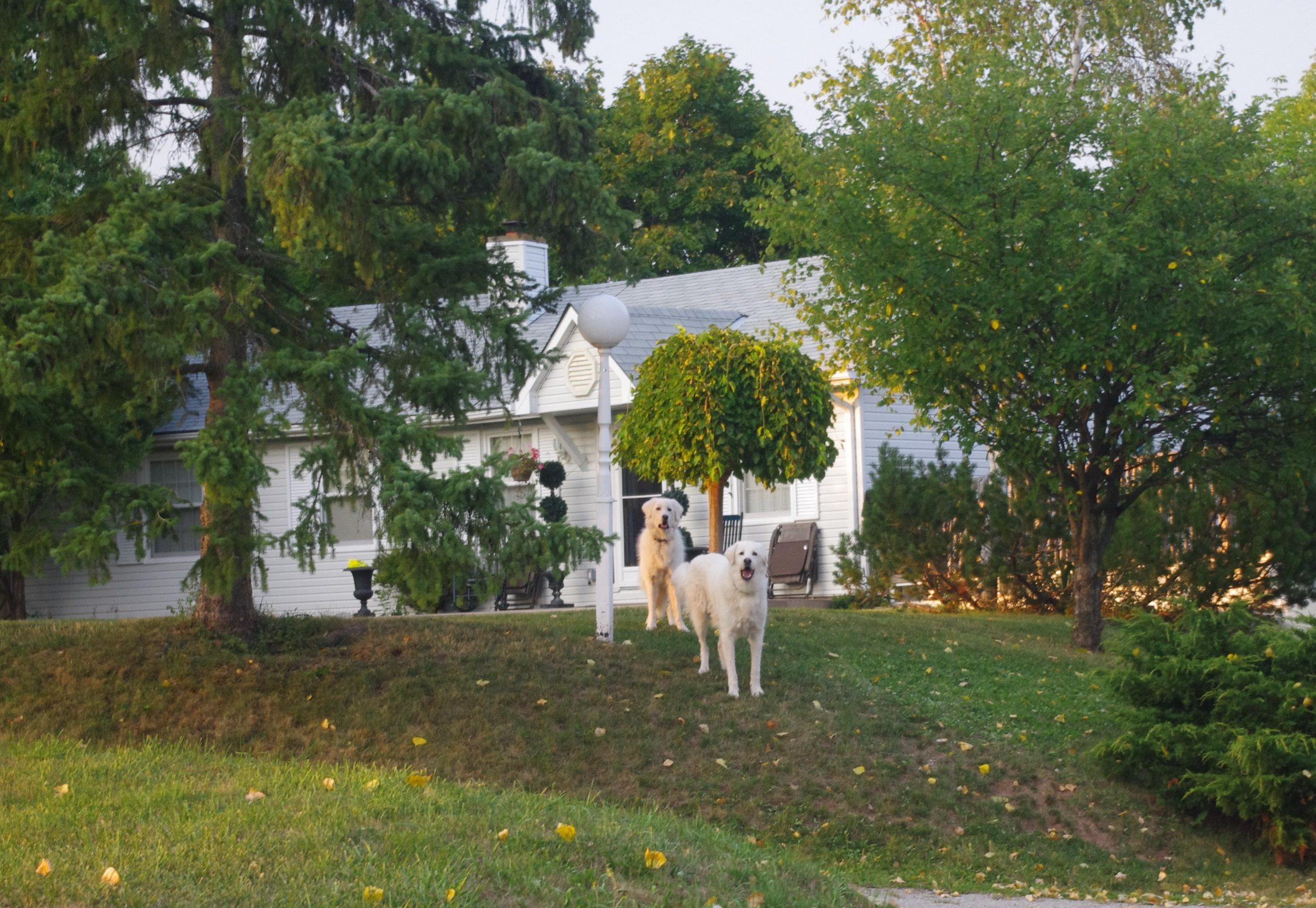
In this horrible incident, Angel and her humans got lucky.
Cat Urbigkit, in her book ‘When Man becomes prey’ has taken up the subject of increased attacks on humans by 5 top predators of North America – black bears, grizzlies, cougars, wolves and coyotes. Her premise is simple:
- The increased interaction of humans and these predators, especially in and near the protected areas, is resulting in increased attacks of these predators on humans.
- Because of these increased attacks, humans likely to confront these predators need to take precautionary measures.
I believe those of us who have chosen to live in areas, where an encounter with any one of these top predators is more likely, need to take extra precautionary measures to protect ourselves and our dogs and other pets in case of an attack. Since the large carnivores are going to be protected species, and very rightly so, I believe large-sized nimble guard dogs can be a deterrent against such an attack on your premises. And if you decide on having a dog, two or more dogs are always better guards than one.
Keeping small dogs in some areas don’t make sense
During my hiking trips in areas where coyotes and black bear flourish, I have observed big trail side homes where K2 and I are greeted or scorned by small and medium size dogs roaming free on the property while the children are playing nearby. This insouciance of home owners toward safety of their furry friends makes me wonder. Agreed that these dogs never crossed the boundary to pose any threat, a coyote or a bear doesn’t necessarily know and obey the “Do not enter the premises” and “no trespassing” rules. Living in risk prone areas with smaller dogs can become life threatening for both humans and their dogs.
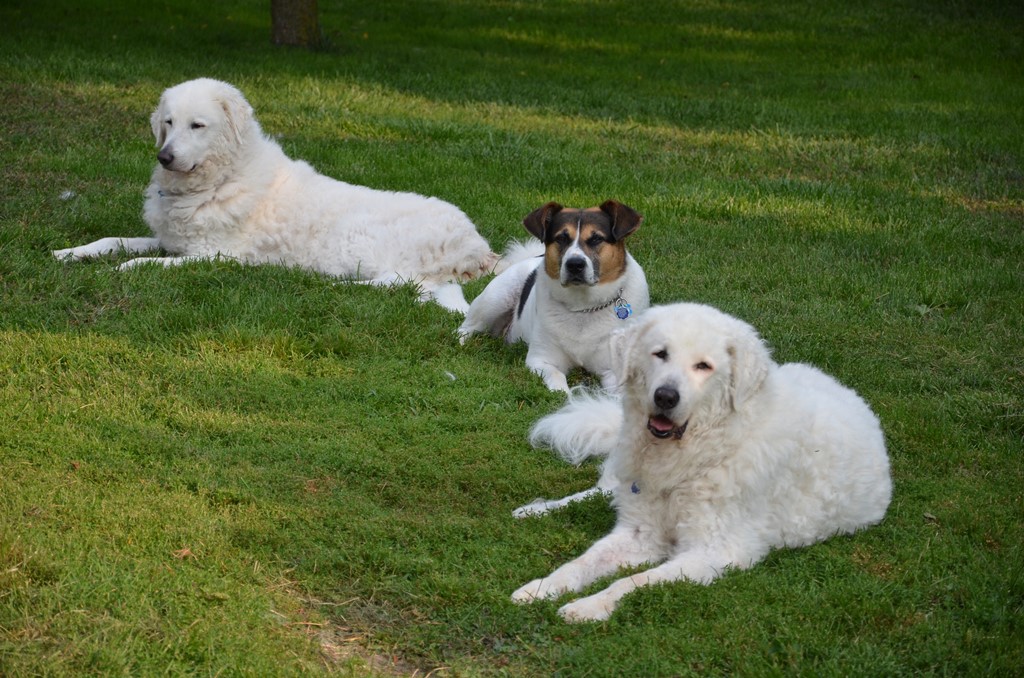
Schmidt)
Let me begin with a disclaimer. I am not talking about taking dogs to hike with you on trails in Grizzly bears or grey wolves territories. I believe that a dog or dogs would unnecessarily attract a grizzly to them and their humans. This will be more prevalent where a grizzly’s and wolf pack’s territories overlap resulting in a conflict between these two big carnivores.
I am talking about dog protecting you and your children at your home.
Also, not all dogs are capable of thwarting an attack by a large predator. Without any rigmarole, I would state that to take on a large carnivore, you need to have dogs who are bigger, are nimble, and have greater “Protection Drive” or “Guardian drive”, a subset of defense drive, instead of prey drive (read here about various kind of drives in dogs).
What types of dogs to keep then?
My extensive primary and secondary research narrows down the options to a category of dog breeds known as livestock guardian dogs or LGDs. This group includes pure breeds like Turkish Kangal, Akbash, and Anatolian Shepherd dog, Central Asian Ovcharka, Caucasian Ovcharka, Serbian Sarplaninac, Bosnian/Croatian Tornjak, Great Pyrenees, Italian Maremma, Polish Tatra, Hungarian Komondor and Kuvasz, etc. and their cross breeds.
I am listing these breeds only because these are active on guard duties in the USA, Canada, and Europe. And because in Europe, LGDs had to protect livestock against bears and wolves, they were bred for large sizes, protection and guardian drives, nimbleness, and valour. These characteristics are what all LGDs should display to thwart the advances of an intruder.
Other dogs:
But LGDs are only one group that I am mentioning because they have low prey drive, meaning that they won’t go out challenging everyone within their reach perceiving them to be a threat. There are other great guarding breeds also, mostly for tropical climates, that can serve the purpose equally well – Fila Brasiliero, Dogo Argentino, Pressa Canario, American and Japanese Akitas, South African Boerbol, Italian Cane Corso, Indo-Pakistani Bulli Kutta, Pit Bulls, etc.
The only drawback with these breeds is that they generally have a high ‘prey’ drive and they may take on the challenge aggressively, rather than passively like the LGDs, and may get hurt or even killed in the process. Protection of these family members should be top of the mind priority.
By comparison, LGDs have a ‘protection and guardian’ drives and its sub-category of territorial and/or pack drive.
Finally, a characteristic that I mentioned earlier that you need to have in the dog(s) is nimbleness. The nimble dogs are better able to harass an intruder and defend themselves and their charges – humans in this case.
Do remember to use dog’s senses to your advantage:
If you live in an area where large carnivores are present, keeping guard dogs (with spiked collars) have distinct benefits. Dogs’ vision is roughly as good as ours, but they have better night vision, peripheral vision and motion detection that can be helpful at your homestead in the dark. Their smelling and hearing senses are much better than ours and can be used to a distinct advantage. Their olfactory sense, especially, provides a window to recent past, present and therefore, near future. They can smell presence of a danger much before humans can. Therefore, your dog(s) behaving nervously may indicate danger lurking nearby.
This happened with Kelly Murray of Barriere, British Columbia. Her Kuvaszok incessantly barked and acted extra protective when Kelly was out in her fields and continued barking from inside the home throughout the night. Kelly discovered the next morning that a cougar had spent a major time of the previous day and the whole night hidden in the bushes nearby.
As I am writing this blog, I am aware that Ontario has a confirmed population of 500 cougars, 85,000 to 105,000 black bears, and several thousands gray wolves, eastern wolves, great lakes boreal wolves, and eastern coyotes. For this reason, if you live in the land of these carnivores your best bet is to keep well trained large size dogs with spiked collars for protection.
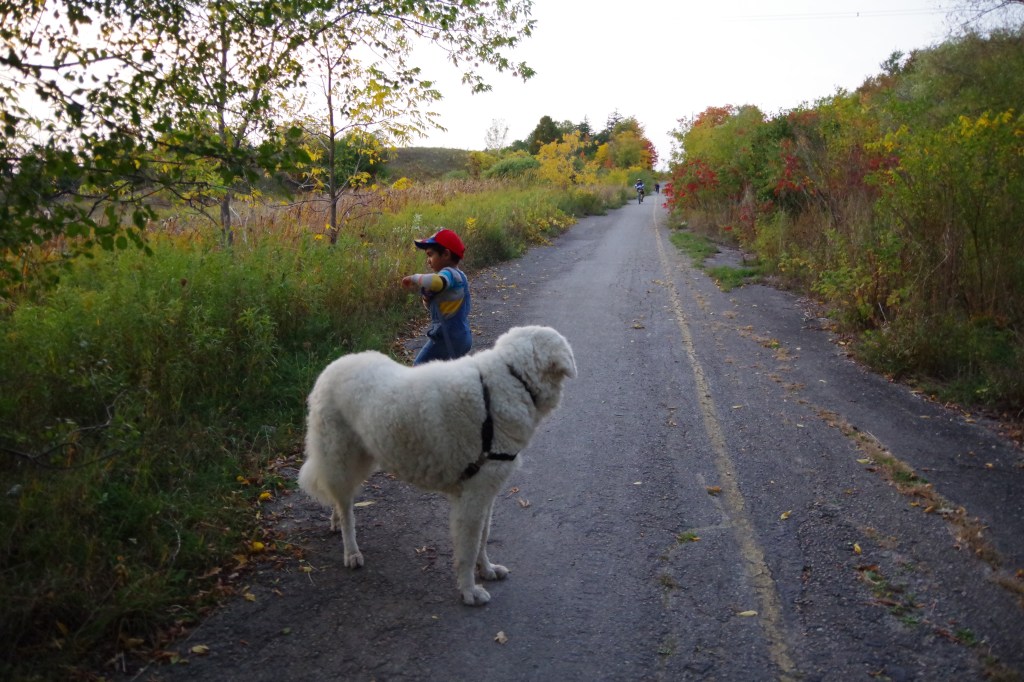
final words
Until our next blog, au revoir! Be outdoorsy, embrace diversity, and support causes for the conservation of nature!
 K2, the Kuvasz, and me